



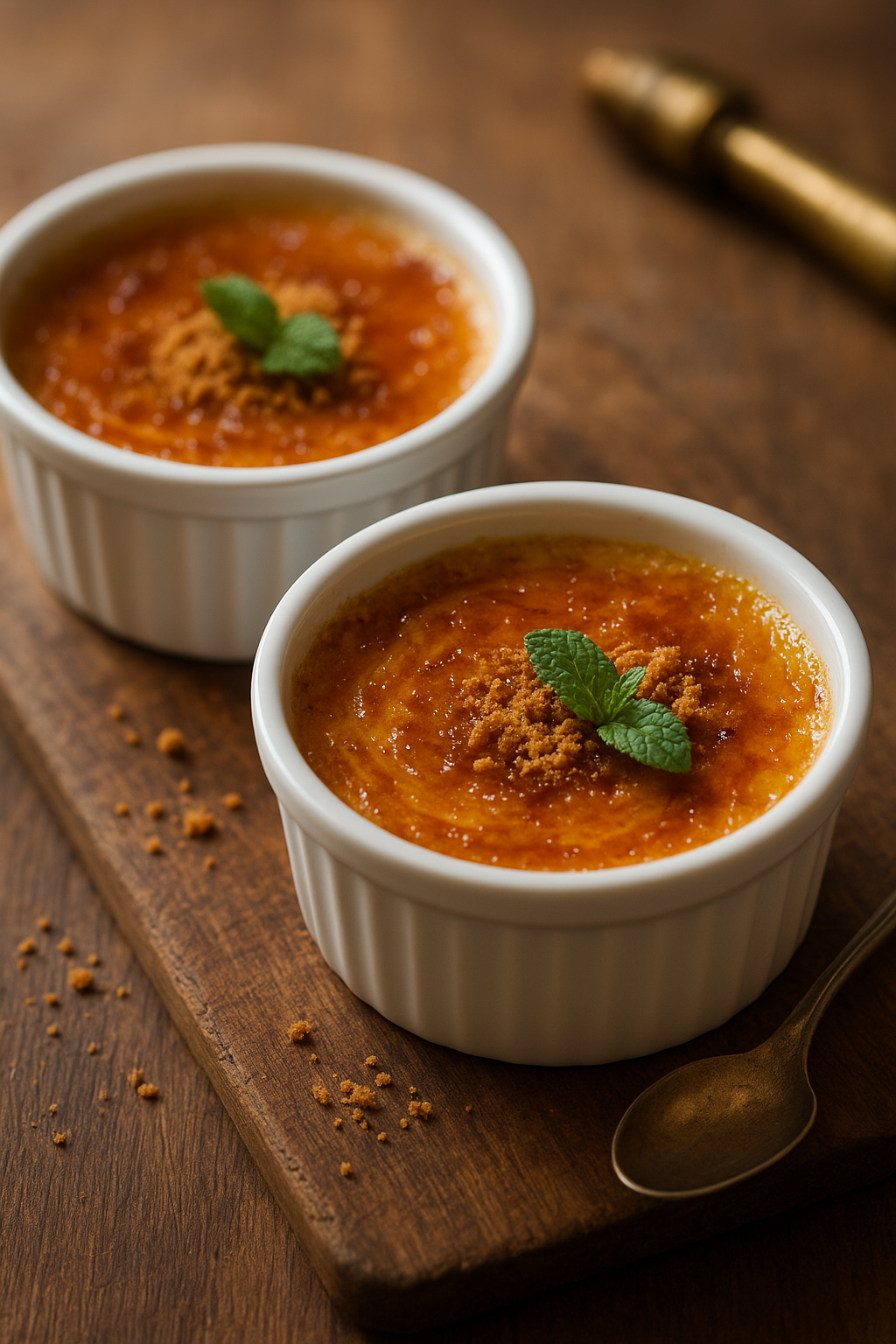
Mini Biscoff Crème Brûlée
Combining Biscoff cookie flavor with classic crème brûlée in individual portions — silky custard, spiced cookie swirl and a crackling caramel top.

Biscoff crème brûlée — Ingredients
- 2 cups (480 ml) heavy cream
- 3 tbsp Biscoff spread (or 3–4 crushed Biscoff cookies stirred into warm cream)
- 1 tsp pure vanilla extract
- Pinch of fine salt
- 5 large egg yolks
- 1/3 cup (65 g) granulated sugar, plus 1–2 tbsp for custard
- Demerara or turbinado sugar for caramelizing the tops
Equipment
- Six 4-oz (120 ml) ramekins
- Baking dish for a bain-marie (roasting pan)
- Kitchen torch (or oven broiler)
- Fine-mesh strainer
- Mixing bowls and whisk
- Measuring cups and spoons
Instructions
- Preheat oven to 300°F (150°C). Place six 4-oz ramekins in a baking dish.
- In a medium saucepan over medium heat, warm the heavy cream with the Biscoff spread (or crushed cookies), vanilla and a pinch of salt. Heat until just steaming — do not boil — and ensure the Biscoff is fully incorporated. Remove from heat and let sit 5 minutes so flavors meld.
- In a bowl, whisk together egg yolks and granulated sugar until the mixture lightens slightly. Temper the eggs by slowly pouring about 1/3 cup of the hot cream into the yolk mixture while whisking constantly. Gradually whisk in the remaining cream.
- Strain the custard through a fine-mesh sieve into a pouring jug to remove any solids for a silky texture. If you used crushed cookies, some small flecks are fine for texture; otherwise strain until smooth.
- Divide the custard evenly among the ramekins. Pour hot water into the baking dish until it reaches halfway up the sides of the ramekins (bain-marie).
- Bake until the edges are set but centers still jiggle slightly, about 30–35 minutes. Turn off the oven and let the ramekins sit in the warm water for 10 minutes, then transfer to a wire rack to cool.
- Chill the ramekins uncovered or lightly covered for at least 4 hours, preferably overnight.
- When ready to serve, sprinkle an even layer of demerara or turbinado sugar over each custard. Use a kitchen torch to caramelize the sugar until golden and crisp. If using a broiler, place ramekins on a baking sheet under the hot broiler 3–6 inches from the heat and watch closely to avoid burning.
- Allow the caramel to harden for a minute, garnish as desired, and serve immediately.
- Use small ramekins for perfectly portioned mini desserts ideal for parties.
- Strain the custard to remove any coagulated egg bits for a silky texture.
- Avoid boiling the cream — overheating can cause curdling or loss of silkiness.
- Chill at least 4 hours or overnight; fully chilled custard gives the best contrast with the hot caramel top.
- Kitchen torch gives the most even caramelization; as a broiler alternative, place ramekins under a very hot broiler and watch constantly.
Serving ideas
Serve each mini Biscoff crème brûlée chilled with the warm, crisp caramelized top. Garnish with a sprinkle of crushed Biscoff crumbs, a dollop of lightly sweetened whipped cream or a few fresh berries. Present on small plates for parties or dessert courses.
FAQ
How long should I chill biscoff crème brûlée and how long does it store?
Chill at least 4 hours, preferably overnight. Store covered in the refrigerator for up to 3 days; re-torch sugar just before serving for best texture.
Can I reheat or re-torch the sugar after chilling?
Yes — you can torch the sugar any time before serving. If the caramel softens after refrigeration, re-torch briefly with a kitchen torch to restore the crack.
Do I need a bain-marie to bake crème brûlée?
A bain-marie (water bath) provides gentle, even heat and helps prevent curdling and cracked custards. You can try a low-temperature direct bake, but results may be less even.
Can I substitute ingredients or make dairy-free?
Yes. Swap Biscoff spread for crushed cookies for texture, or use speculoos spread for a slightly different spice note. For dairy-free versions, use full-fat canned coconut cream; texture will be slightly different but still delicious.
Want more dessert ideas? Browse our recipes at /recipes/ or read technique notes on Serious Eats.