



Traditional Steamed Syrup Sponge
A classic British steamed syrup sponge recipe — learn what makes a syrup sponge “steamed” rather than baked and how to get a glossy, sticky topping every time.
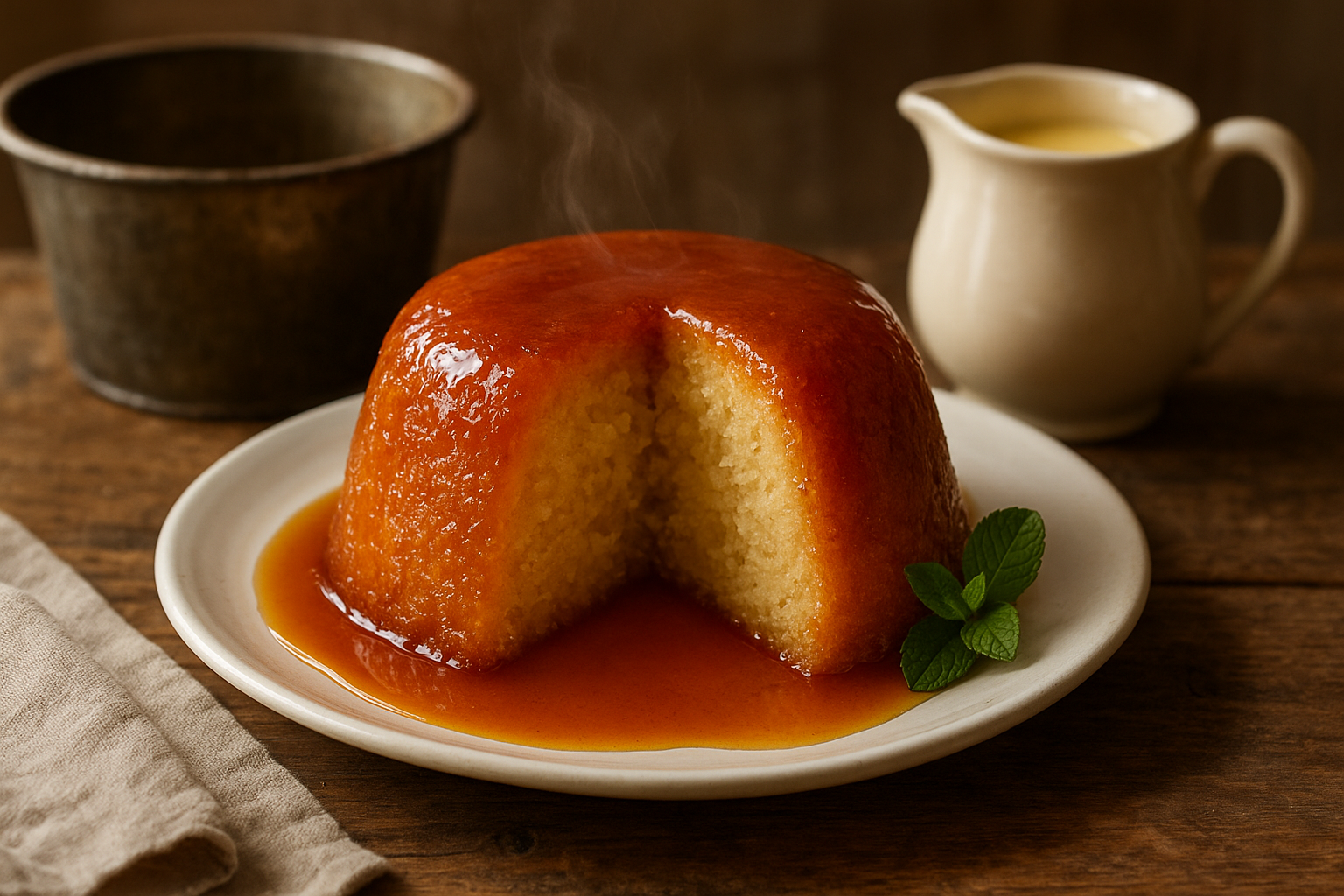
About this recipe
Steamed syrup sponge is a nostalgic pudding with a soft, moist sponge and a sticky syrup topping. What makes it steamed rather than baked is the gentle, moist heat surrounding a covered pudding tin (or basin), creating cloud-like texture and an indulgent syrup layer.
Key ingredients
- 225g self-raising flour
- 115g unsalted butter, softened (or plant butter for dairy-free)
- 115g caster sugar
- 2 large eggs, room temperature
- 60ml milk (or oat/plant milk)
- 6–8 tbsp golden syrup (or treacle/molasses for darker flavour)
- Pinch of salt
- Optional: zest of 1 lemon or 1 tsp ground ginger/cinnamon
Equipment
- 1 x 1.2–1.5 litre pudding tin (or loaf tin) with a lid
- Large deep pan with tight-fitting lid, steamer, or electric steamer
- Mixing bowls, spatula, wooden spoon
- Cloth or foil to wrap tin lid to prevent drips
Instructions
- Prepare the syrup base: spoon 6 tablespoons of golden syrup into the bottom of the pudding tin. For a looser syrup, gently warm the syrup until pourable (do not boil) then pour. Reserve extra to serve.
- Cream butter and sugar: in a bowl, beat together the softened butter and caster sugar until pale and fluffy.
- Beat in eggs and milk: add eggs one at a time, mixing well between each. Stir in the milk and any optional zest or spice.
- Fold in flour: sift in the self-raising flour and a pinch of salt, folding gently until just combined. Avoid overmixing to keep the sponge light.
- Fill the tin: spoon the batter carefully over the syrup in the tin and level the top. Cover the tin with its lid and wrap the lid edge with a double layer of clean baking cloth or foil to catch condensation and prevent drip marks.
- Steam: place the covered tin in a large pan with a trivet or upturned saucer in the base. Add enough simmering water to come about halfway up the tin. Cover the pan with a tight-fitting lid and steam gently for 45–60 minutes until the sponge is springy and a skewer inserted into the centre comes out clean. Replenish water if it gets low.
- Rest briefly and invert: remove the tin from the pan and let it sit for 5 minutes. Invert onto a warmed serving plate so the syrup runs over the sponge. If you prefer, warm extra syrup and pour over when serving.
Steamed syrup sponge: method overview
This steamed syrup sponge method gives you a tender, moist crumb and a glossy caramelised syrup topping. Steaming keeps the pudding humid and prevents a crust forming like in the oven.
Syrup options & technique
Use golden syrup for classic flavour, or substitute treacle/molasses for a richer, darker taste. Warm syrup slightly to loosen before pouring into the tin, or reserve to glaze the sponge after steaming for an extra sticky finish.
Timing & doneness
Look for a springy surface and a skewer that comes out clean or with a few moist crumbs. Avoid over-steaming — overcooked sponge can become dense. If the top looks wet or undercooked, steam for an additional 10–15 minutes and test again.
Tips
Pro tips: use room-temperature ingredients; fold flour gently; wrap the lid in cloth to avoid drips; for electric steamer or slow-cooker steaming use the same timing but check doneness earlier. If using a larger tin, increase steaming time by 10–20 minutes and test.
Variations
- Treacle/molasses: swap golden syrup for a darker flavour.
- Lemon or ginger: add lemon zest or 1 tsp ground ginger for brightness.
- Dairy-free: use plant butter and oat milk in equal amounts.
- Gluten-free: use a 1:1 gluten-free self-raising blend and increase binding slightly with an extra egg if needed.
Serving ideas
Serve warm inverted with extra hot syrup, custard, clotted cream, or vanilla ice cream. Slice and serve with a pot of tea for a traditional afternoon treat.
Storage & reheating
Store covered in the fridge for 2–3 days. Reheat gently in the microwave for short bursts or steam until warmed through to retain moisture.
Nutrition estimate (per serving)
Approx: 380 kcal | Fat 18g | Saturates 10g | Carbs 50g | Sugars 28g | Protein 6g | Salt 0.3g
FAQ
Can I bake it instead of steaming?
Yes — bake at 160°C/140°C fan (320°F) for 35–45 minutes in a water bath for a similar moist result, though texture will be slightly different and a crust may form.
How long to steam a different tin size?
Smaller tins may need 35–45 minutes; larger tins 60–75 minutes. Always test with a skewer for doneness.
Can I make it ahead?
Yes — steam, cool, cover and refrigerate. Reheat by steaming or gently microwaving, and warm extra syrup for serving.
How to fix a soggy or undercooked centre?
Return the pudding to the steamer and continue to steam in 10–15 minute increments. If the top is soggy but the centre is okay, remove and leave uncovered briefly to let excess moisture evaporate.
For more classic puds see our collection at MadeForRecipes – Recipes or read more about steaming techniques at BBC Good Food.