

Traditional Victoria Sponge Cake Recipe
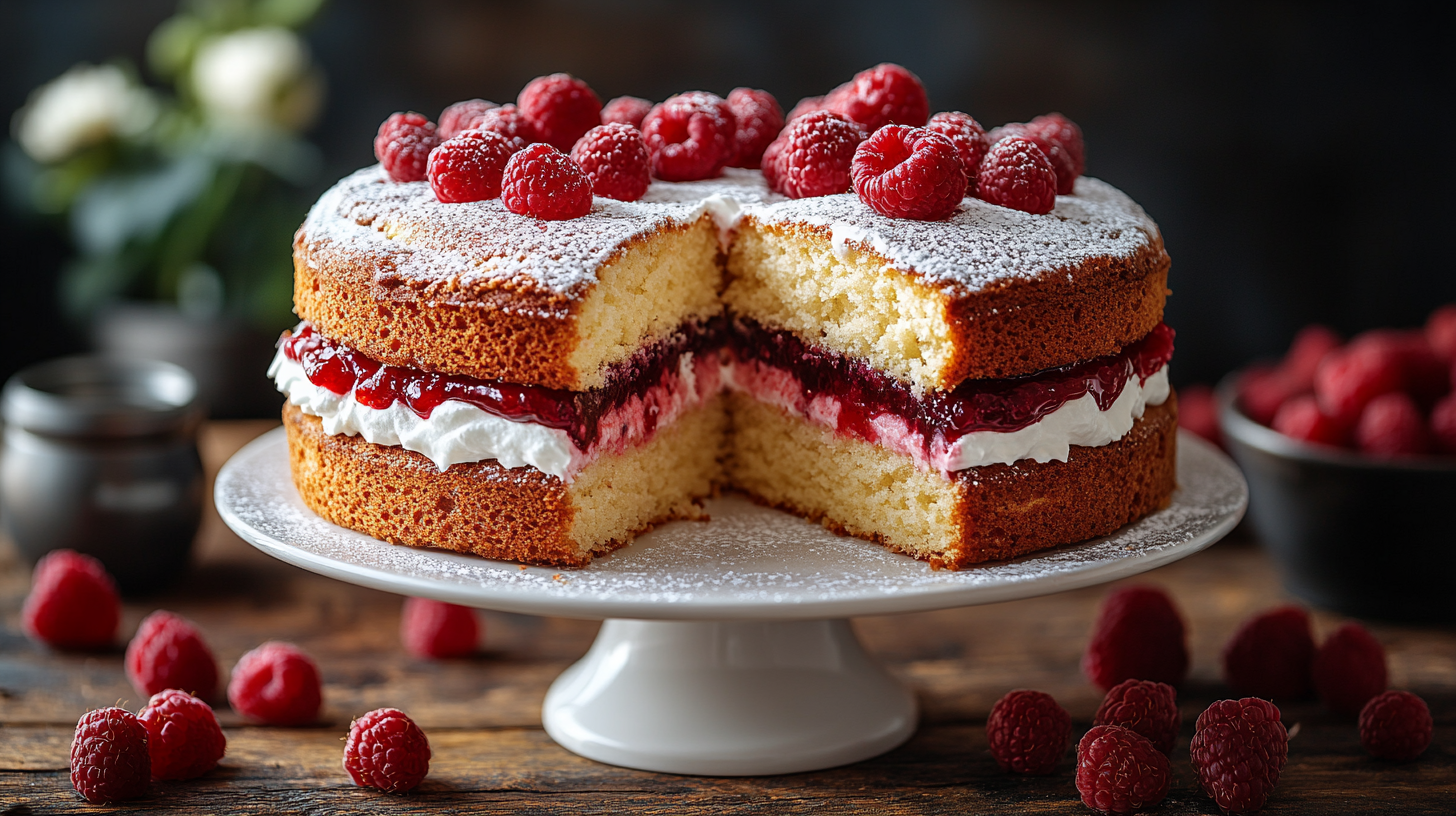
This traditional Victoria sponge cake recipe brings together two light vanilla sponge layers with strawberry jam and cream for a classic British afternoon tea cake.
Recipe Card
A classic Victoria sponge cake made with soft vanilla sponge, strawberry jam and cream. This easy British cake is perfect for afternoon tea, birthdays or a simple homemade dessert.
Ingredients for Victoria sponge cake
- 200g unsalted butter, softened
- 200g caster sugar
- 4 medium eggs, room temperature
- 200g self-raising flour
- 1 tsp baking powder
- 2 tbsp milk
- 1 tsp vanilla extract
- 150g strawberry jam
- 200ml double cream, whipped, or buttercream
- Icing sugar, for dusting
Equipment
- 2 x 20cm round cake tins
- Mixing bowl
- Electric mixer or wooden spoon
- Spatula
- Baking paper
- Wire rack
- Sieve for dusting icing sugar
Instructions
- Step 1: Prepare the tins. Preheat the oven to 180°C / 160°C fan / 350°F. Grease two 20cm round cake tins and line the bases with baking paper.
- Step 2: Cream butter and sugar. Beat the softened butter and caster sugar together until pale, light and fluffy. This helps create a soft sponge texture.
- Step 3: Add the eggs. Beat in the eggs one at a time. Add a spoonful of flour with each egg if the mixture starts to curdle.
- Step 4: Fold in the dry ingredients. Sift in the self-raising flour and baking powder, then fold gently until just combined.
- Step 5: Add milk and vanilla. Stir in the milk and vanilla extract until the batter is smooth and soft, but do not overmix.
- Step 6: Divide the batter. Spoon the mixture evenly into the prepared tins and smooth the tops with a spatula.
- Step 7: Bake. Bake for 22–25 minutes, or until the cakes are golden, risen and spring back when lightly pressed.
- Step 8: Cool. Leave the cakes in the tins for 5 minutes, then turn them out onto a wire rack and let them cool completely.
- Step 9: Fill the cake. Spread strawberry jam over one sponge layer, then add whipped cream or buttercream. Place the second sponge on top.
- Serve: Dust the top with icing sugar and serve in slices with tea.
Nutrition (per slice)
~390 kcal • Carbs 45 g • Fat 21 g • Protein 6 g (estimates)
Serving & Variations
- Classic serving: Serve Victoria sponge cake with a cup of tea for a traditional British afternoon tea.
- Filling choice: Use whipped cream for a lighter cake or vanilla buttercream for a richer version.
- Jam variation: Strawberry jam is classic, but raspberry jam also works beautifully.
- Decoration: Keep it simple with icing sugar, or add fresh strawberries for a prettier finish.
- Storage: Store the filled cake in the fridge if using whipped cream. Bring it to room temperature before serving.
- Helpful link: For more homemade baking ideas, explore our recipes collection.
FAQ
Why is my Victoria sponge cake heavy?
A heavy sponge usually happens when the batter is overmixed, the butter is too cold, or the flour is folded in too roughly. Use room-temperature ingredients and fold gently.
Can I use buttercream instead of whipped cream?
Yes. Buttercream is a popular filling and makes the cake more stable, especially if you want to prepare it ahead of time.
Can I make Victoria sponge cake ahead of time?
Yes. You can bake the sponge layers one day ahead. Store them wrapped at room temperature, then fill and dust the cake before serving.
What jam is best for Victoria sponge cake?
Strawberry jam is the most classic choice, but raspberry jam gives a slightly sharper flavour and also works very well.