



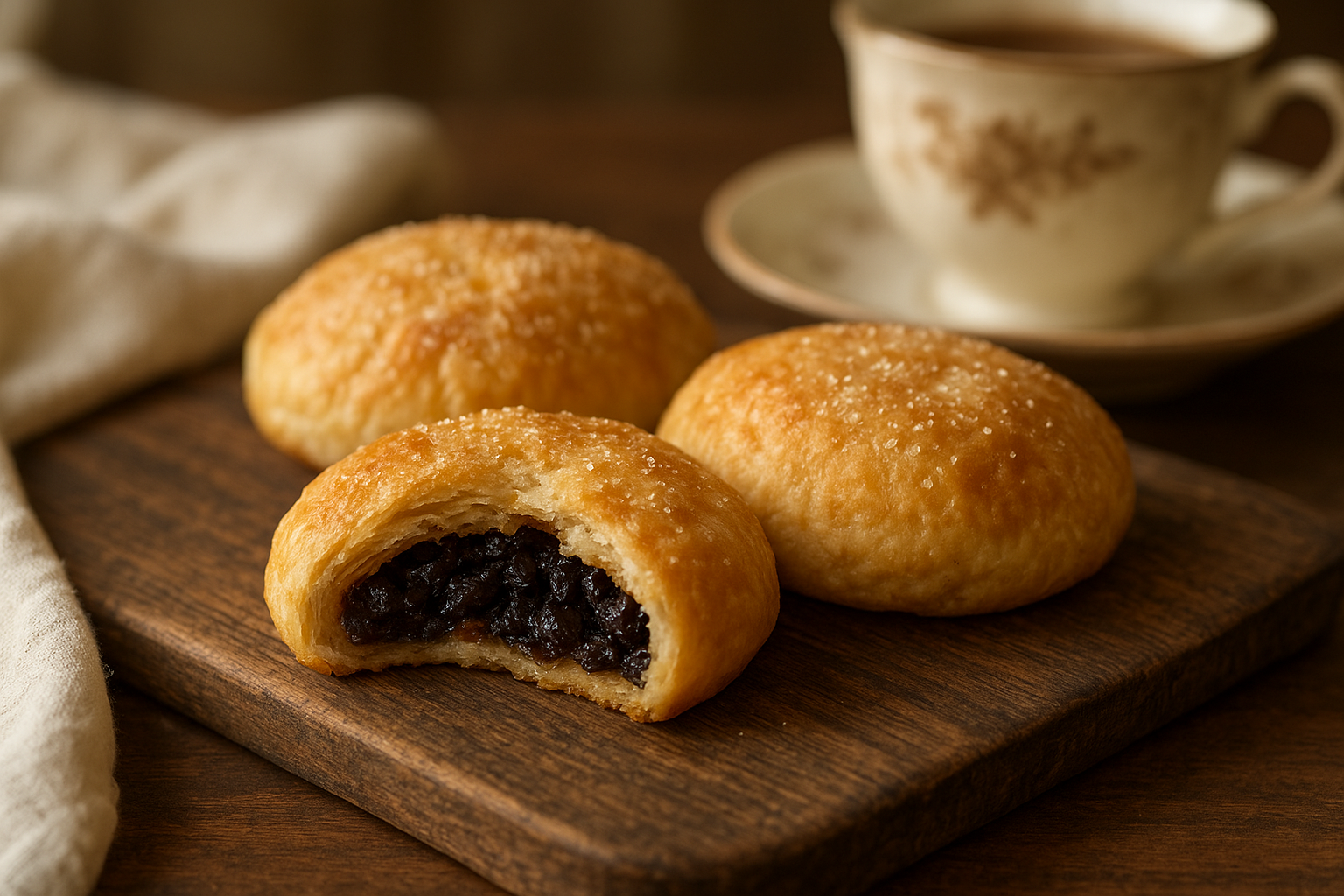
Traditional Eccles Cakes
Classic British pastries from Eccles — what makes an Eccles cake traditional is the flaky pastry filled with spiced currants (or raisins), often made with suet for an authentic texture.

Ingredients
- 1 sheet puff pastry (or equivalent flaky pastry), chilled (about 250–300g)
- 200g currants (or raisins)
- 75g soft brown sugar
- 60g unsalted butter, softened OR 60g shredded beef suet (for authentic texture)
- Zest of 1 lemon (or 1 orange, optional)
- 1 tsp mixed spice OR 1/4 tsp ground nutmeg
- 1 egg, beaten (for egg wash)
- 2 tbsp caster (superfine) sugar for sprinkling
- Optional: 1–2 tbsp hot water or rum to plump dried fruit if needed
Equipment
- Baking tray lined with parchment
- Rolling pin
- Mixing bowl
- Pastry brush
- Cookie cutter or glass (~8cm diameter) or a sharp knife
- Fork for sealing (optional)
Instructions
- Prepare the currant filling: if your currants are very dry, place them in a bowl and cover with hot water or a splash of rum for 10 minutes, then drain well. Transfer to a mixing bowl.
- Mash together the brown sugar and softened butter (or shredded suet) with the zest and mixed spice (or nutmeg) until combined. Stir into the drained currants so the fruit is evenly coated. If the mix seems too dry, add 1 tsp hot water at a time.
- Lightly flour your work surface and roll the chilled pastry to about 3–4mm thickness. Use an 8cm cutter or glass to cut 16 rounds (8 bases + 8 tops). Keep pastry cold while working to ensure flakiness.
- Weigh out about 30–35g of filling per cake (or use a tablespoon) for uniform sizes and place a mound in the center of 8 rounds.
- Brush the edges of each filled round with a little beaten egg (or water). Cover with a second round of pastry and press the edges to seal. Finish the top by cutting a small cross or slits to allow steam to escape.
- Brush each cake with beaten egg and sprinkle evenly with caster sugar for a sparkling finish.
- Preheat the oven to 200°C / 400°F (180°C fan). Place the cakes on the prepared tray and bake for 20–25 minutes until golden, puffed and flaky.
- Remove from oven and cool slightly on a wire rack. Serve warm or at room temperature.
Nutrition estimate (per cake)
Approx: 260 kcal • Fat 12g • Carbs 33g • Protein 2g (estimate depends on exact ingredients and pastry type)
Serving ideas
- Serve warm with a pot of strong black tea or coffee.
- Try with clotted cream, thick cream or warm custard for a richer dessert.
- Reheat briefly in an oven or toaster oven for a freshly baked texture.
Frequently asked questions
Store baked cakes in an airtight container at room temperature for up to 2 days. Refrigerate up to 4 days. For freezing, flash-freeze baked cakes on a tray, then transfer to a freezer bag for up to 2 months. You can also freeze unbaked, sealed cakes on a tray and then bag them for up to 1 month—bake from frozen, adding a few extra minutes.
How should I reheat Eccles cakes?Reheat in a preheated 180°C/350°F oven for 5–8 minutes until warmed through and crisped. Avoid microwaving, which makes pastry soggy.
Suet vs butter — which should I use?Suet gives a more traditional, slightly denser texture and is authentic to many recipes. Butter is easier to work with and yields a more familiar puff/pie-like flakiness. Use suet for authenticity, butter for convenience.
Why is my base soggy or my filling runny?Soggy bases often happen if the filling is too wet—drain soaked fruit well and don’t over-plump. Ensure pastry is cold and bake at a high temperature so the base sets quickly. If filling runs out, seal edges well and dock/slit tops to release steam rather than letting it force seams open.
For more British baking recipes, visit our recipes collection: MadeForRecipes — Recipes or read about the history of Eccles cakes at this reference: Wikipedia — Eccles cake.