


Traditional British Fruit Scones
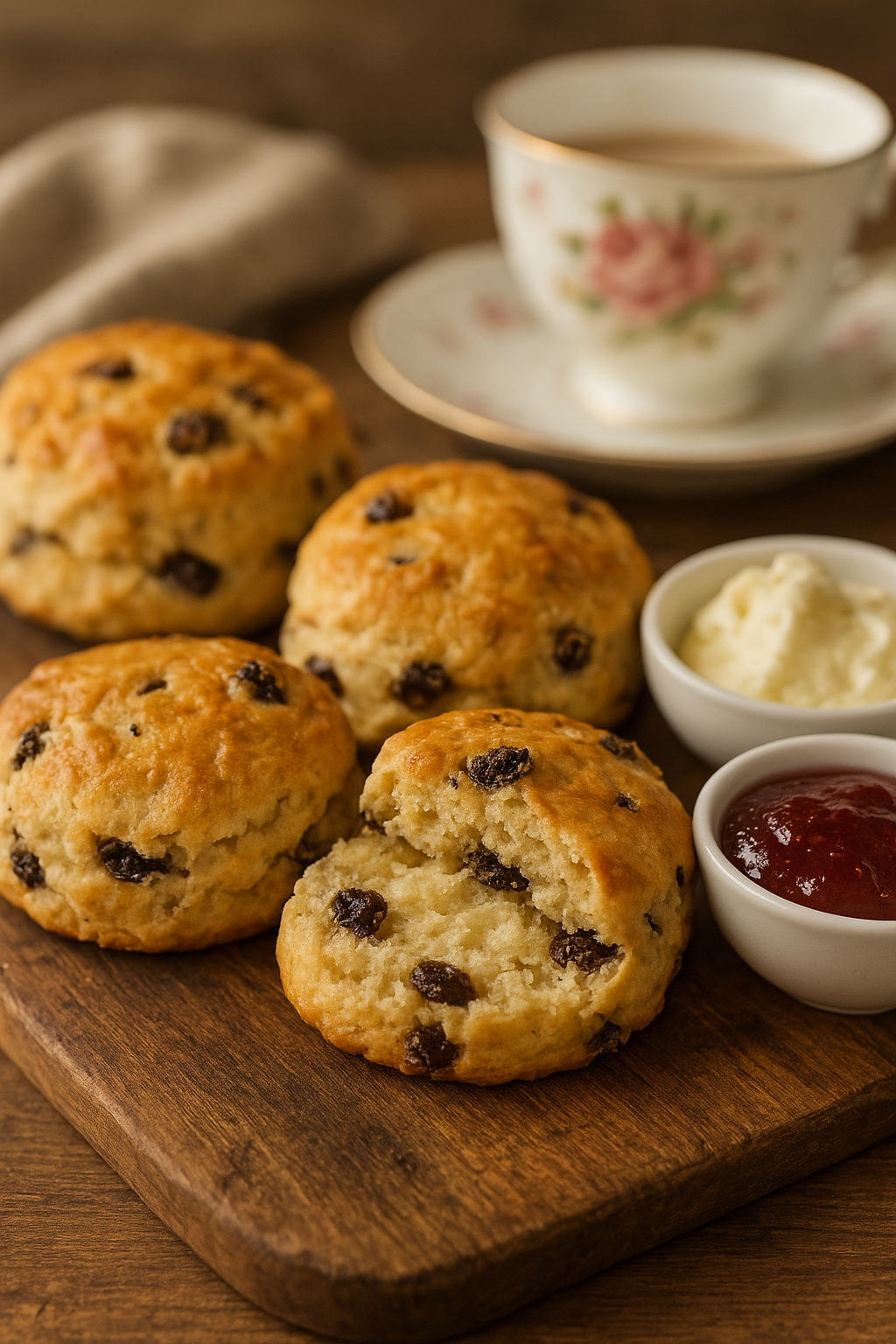
Classic British fruit scones: light, tender, and studded with currants or sultanas. Perfect warm from the oven with clotted cream and jam.
Ingredients
- 400g plain (all-purpose) flour, plus extra for dusting
- 2 tsp baking powder
- 1/2 tsp fine salt
- 40–60g caster (superfine) sugar, to taste
- 100g cold unsalted butter, cubed
- 150g mixed dried fruit (currants, sultanas or raisins)
- 240–300ml milk or buttermilk
- 1 egg (optional, for richer dough and wash)
- 1 tsp vanilla extract or grated lemon zest (optional)
Equipment
- Baking tray lined with parchment
- Mixing bowl(s)
- Pastry cutter or food processor (optional)
- Rolling pin or hands to pat dough
- Round cutter (6 cm) or knife for wedges
- Brush for milk/egg wash
Instructions
- Preheat the oven to 220°C/200°C fan/425°F. Line a baking tray with parchment.
- Whisk the flour, baking powder, salt and sugar in a large bowl.
- Rub or pulse the cold butter into the dry ingredients until the mixture resembles coarse breadcrumbs with some pea-sized pieces remaining. This keeps the scones flaky.
- Toss the mixed dried fruit in a little of the flour mixture (this helps prevent sinking) then fold into the dry mix.
- Make a well and pour in most of the milk or buttermilk (reserve a splash). Add vanilla or zest if using. Stir gently with a knife or spatula until a soft, slightly sticky dough just comes together. Add a little more milk if needed. Avoid overworking.
- Turn the dough onto a lightly floured surface. Pat or roll to about 2–3 cm thickness. If making rounds, press a floured cutter straight down—do not twist. For wedges, cut into 8 pieces.
- Place the scones on the tray close together for higher rise. Chill in the fridge for 10 minutes if your kitchen is warm; this helps them retain lift.
- Brush the tops with a little milk or beaten egg for shine. Bake for 12–18 minutes until risen and golden on top.
- Transfer to a cooling rack. Serve split warm with clotted cream and strawberry jam or butter and lemon curd.
Nutrition (estimate per scone)
Calories 220 kcal; Fat 9 g; Saturates 5 g; Carbs 30 g; Sugar 10 g; Protein 4 g; Salt 0.4 g.
Serving ideas
- Split warm fruit scones and serve with clotted cream and strawberry jam—the classic combination.
- Or try butter and lemon curd for a tangy contrast.
- Pair with a strong black tea such as English Breakfast or Earl Grey.
Frequently asked questions
Q: Can I use raisins instead of currants or sultanas?
A: Yes. Currants are traditional but raisins or sultanas work fine—toss them in flour first so they don’t sink.
Q: Can I use fresh fruit in fruit scones?
A: Fresh fruit adds extra moisture and can make the dough soggy. Use sparingly (small berries) or reduce milk slightly and coat fruit in a little flour.
Q: What substitutions work for dairy or eggs?
A: Use plant-based milk plus a tablespoon of lemon juice for buttermilk substitute and vegan butter in place of dairy. For egg wash, use milk or a milk alternative.
Q: How should I store and reheat scones?
A: Store cooled scones in an airtight container for 2 days. Freeze baked scones wrapped individually for up to 3 months; reheat from frozen at 160°C/325°F for 8–12 minutes. You can also freeze unbaked rounds on a tray then transfer to a bag and bake from frozen, adding a few minutes to the bake time.
For more recipes and baking tips, visit our collection at /recipes/ or see a trusted method at BBC Good Food’s scone guide.