



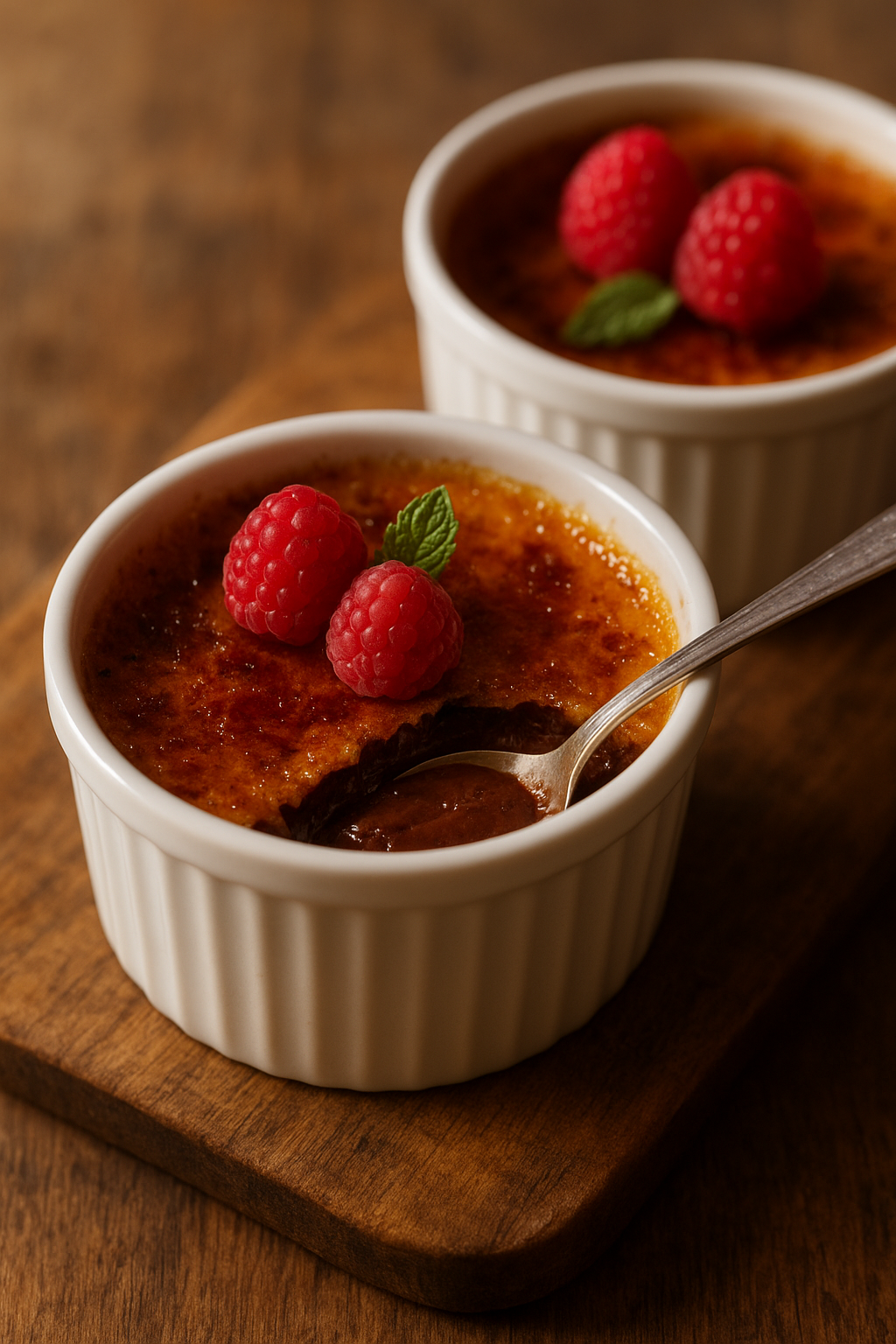
Mini Chocolate Creme Brulee
A single-serve twist on classic crème brûlée with rich chocolate flavor — perfect for elegant dinners or quick make-ahead treats.

Mini Chocolate Creme Brulee — Recipe
Key ingredients
- 2 cups (480 ml) heavy cream
- 4 oz (115 g) high-quality dark chocolate, chopped (or 1/3 cup unsweetened cocoa powder + extra sugar)
- 4 large egg yolks
- 1/2 cup (100 g) granulated sugar, plus extra for topping
- 1 tsp vanilla extract
- Pinch of salt
Equipment
- 3–4 oz ramekins (4 pieces)
- Baking dish large enough for a bain-marie
- Kitchen torch or oven broiler
- Fine-mesh sieve
- Mixing bowls and whisk
Instructions
- Preheat oven to 325°F (160°C). Place ramekins in a deep baking dish.
- In a saucepan over medium heat, warm the heavy cream with the chopped dark chocolate and vanilla, stirring constantly until the chocolate is fully melted and the mixture is hot but not boiling. Remove from heat and let cool 3–5 minutes.
- In a bowl, whisk the egg yolks with the 1/2 cup granulated sugar and a pinch of salt until smooth and slightly pale. Temper the eggs by slowly whisking a few tablespoons of the warm chocolate-cream into the yolks, then gradually whisk the tempered yolks back into the remaining chocolate-cream. Strain the custard through a fine-mesh sieve into a pouring jug to remove any bits.
- Divide the custard evenly among the ramekins. Pour hot water into the baking dish to reach about halfway up the sides of the ramekins (bain-marie).
- Bake at 325°F (160°C) for 25–35 minutes, or until the edges are set and the centers still have a slight jiggle when gently shaken.
- Carefully remove ramekins from the water bath and cool to room temperature. Refrigerate for at least 2 hours, preferably 3–4 hours or overnight for best texture.
- When ready to serve, evenly sprinkle a thin layer of granulated sugar over each custard. Use a kitchen torch to caramelize the sugar until golden and crisp. If using a broiler, place ramekins on a baking sheet and broil 2–4 inches from the heat until sugar bubbles and caramelizes—watch closely to prevent burning.
- Let the sugar crust harden for a minute, then serve immediately. Enjoy with fresh berries or a mint sprig.
Nutrition estimate (per mini ramekin)
Approximate: 320 kcal; 25g fat; 18g carbohydrates; 6g protein. Values vary by chocolate and portion size.
Pro tips: Avoid scrambling the eggs by tempering slowly; test doneness by a slight jiggle in the center; use fine sugar for an even caramelized crust; baking in small ramekins shortens set time. Make ahead — chill fully and torch the sugar just before serving for best texture.
Serving ideas
- Garnish with fresh raspberries or blackberries and a small mint sprig.
- Finish with grated dark chocolate or a sprinkle of flaky sea salt for contrast.
- Pair with strong coffee or a sweet dessert wine like Sauternes or Tawny Port.
FAQ
How long should I chill mini chocolate creme brulee?
Chill at least 2 hours, preferably 3–4 hours or overnight. Longer chilling improves texture and makes caramelizing easier.
Should I use a torch or broiler to caramelize the sugar?
A kitchen torch gives the most control and produces a perfectly even crust. A broiler works in a pinch—place ramekins close to the heat and watch carefully to avoid burning.
How do I prevent cracks or a grainy texture?
Temper eggs slowly with warm cream to prevent scrambling. Avoid boiling the custard; bake gently in a bain-marie and do not overbake. Using high-quality chocolate and straining the mixture also helps prevent graininess.
Are there dairy-free or egg-free alternatives?
For dairy-free: use full-fat coconut milk instead of heavy cream and a dairy-free chocolate. For egg-free: try a custard set with agar-agar or a silken tofu-based chocolate mousse, but results will differ from classic creme brulee.
How long can I store them?
Store uncaramelized custards covered in the refrigerator for up to 3 days. Once torched, best eaten same day; caramelized sugar can soften after 24 hours.
Want more desserts? Browse our collection at MadeForRecipes Desserts or read a deep dive on custard science at Serious Eats.