



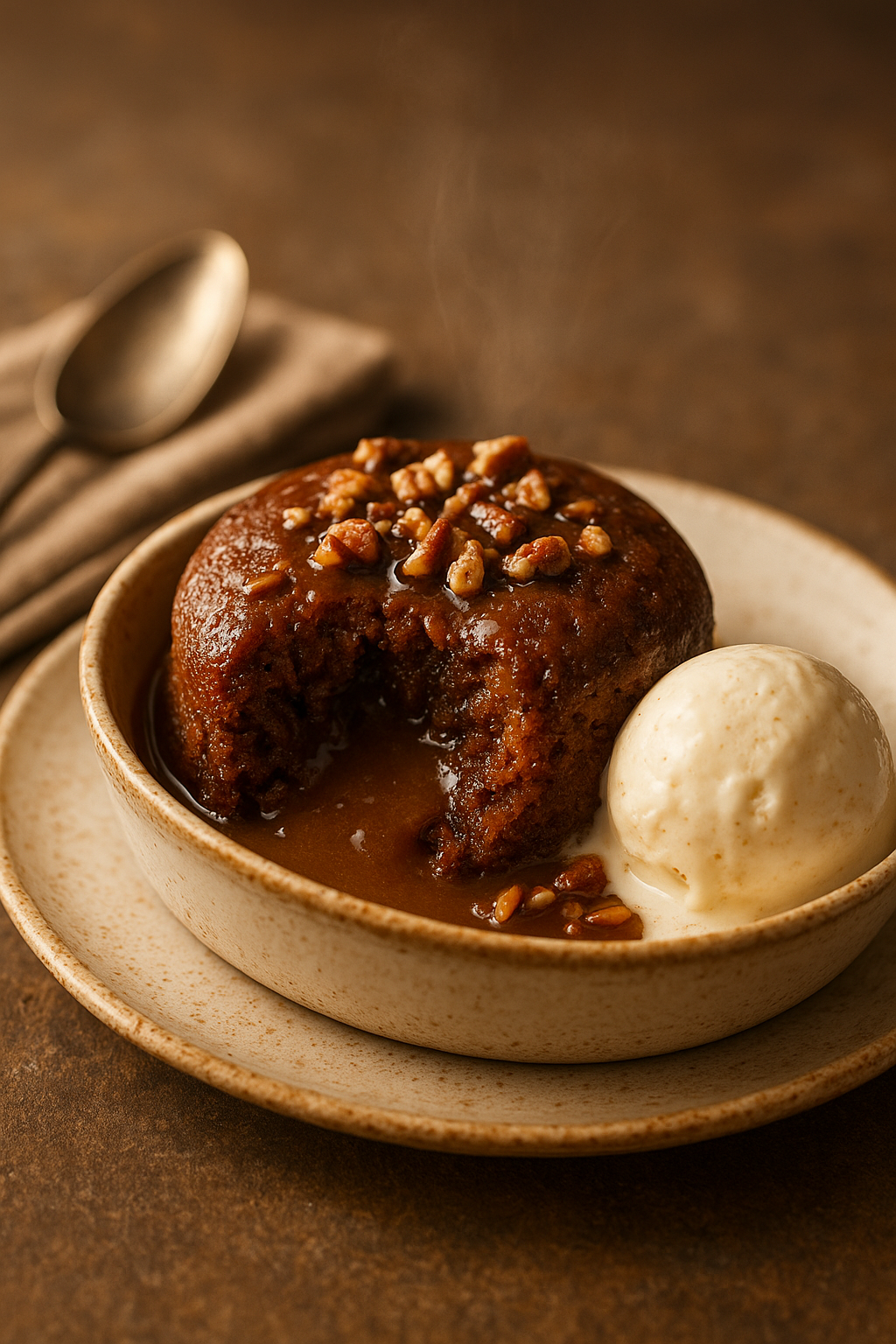
Perfect Sticky Toffee Pudding
Sticky toffee pudding sinking can ruin a show-stopping dessert. Learn why puddings sink and how to prevent it, plus a fail-safe recipe and quick fixes.

Perfect Sticky Toffee Pudding
Why sticky toffee pudding sinking happens
Understanding why sticky toffee pudding sinking happens helps you avoid a collapsed center. Below you’ll find ingredients, a concise method, common causes of sinking, prevention tips, quick fixes, and serving ideas.
Key ingredients
- 200g dates, pitted and chopped
- 200ml hot water (plus 1 tsp bicarbonate of soda optional)
- 120g soft brown sugar
- 100g unsalted butter, room temperature
- 2 large eggs, room temperature
- 175g self-raising flour (or 175g plain flour + 2 tsp baking powder)
- 1 tsp vanilla extract
- 2–3 tbsp milk if needed to loosen batter
- Optional: 60g chopped walnuts or pecans
Toffee sauce
- 100g unsalted butter
- 150g dark brown sugar
- 200ml double cream (heavy cream)
- Pinch sea salt (optional)
Equipment
- 20–22cm (8–9in) square or round baking tin (leave room for batter to rise)
- Mixing bowls, wooden spoon or electric mixer
- Sieve for flour
- Skewer for doneness test
- Saucepan for toffee sauce
Method (concise step-by-step)
- Preheat the oven to 180°C / 350°F. Grease and line the tin, leaving room for the pudding to rise.
- Place chopped dates in a bowl and pour over the hot water. Stir in 1 tsp bicarbonate of soda if using; set aside to soften for 10–15 minutes.
- Cream the butter and brown sugar until light and fluffy. Beat in the eggs one at a time, then fold in the sifted flour (or flour + baking powder) and vanilla. Fold in the soaked dates (drain excess liquid) and nuts if using. Add 1–2 tbsp milk only if the batter is very thick.
- Pour batter into the prepared tin (do not overfill—leave at least 2cm / 3/4in gap). Bake 30–35 minutes or until a skewer inserted into the center comes out with a few moist crumbs, not wet batter.
- While pudding bakes, make the hot toffee sauce: melt butter and brown sugar in a saucepan, stir in cream and simmer gently 2–3 minutes until glossy. Add a pinch of sea salt if desired.
- Pour warm toffee sauce over the warm pudding just after baking or serve sauce alongside. Serve with vanilla ice cream, clotted cream or whipped cream.
Common causes of sinking
- Underbaking – the center isn’t set.
- Incorrect oven temperature or cold spots.
- Too much leavening (baking powder/soda) causing rapid rise and collapse.
- Overmixing (toughens structure) or undermixing (uneven rise).
- Incorrect tin size or overfilling the tin.
- Too wet batter or excess soaking liquid left in dates.
- Opening the oven door early and letting heat escape.
Prevention tips
Quick fixes and troubleshooting
- If slightly underdone, return to the oven for 5–10 minutes uncovered at 160°C/320°F until set.
- If the pudding has collapsed fully, serve immediately with extra warm toffee sauce—the flavor is still delicious.
- Repurpose a collapsed pudding as a layered trifle or warm parfait with whipped cream and fruit.
Nutrition estimate (per serving)
Approx: 520 kcal, 18g fat, 70g carbs, 5g protein (estimate depends on portion size and ingredients).
Serving ideas
- Warm toffee sauce poured generously over the pudding
- Scoop of vanilla ice cream or clotted cream
- Whipped cream and toasted nuts (pecans or walnuts)
- A small dusting of flaky sea salt to offset the sweetness
FAQ
Q: Is a slightly sunk center OK?
A: Yes. A small indent can be normal and still taste fantastic—serve with extra sauce. It becomes a problem if the center is raw or wet.
Q: How to test doneness?
A: Use a skewer: it should come out with a few moist crumbs, not wet batter. The edges should be pulled slightly from the tin.
Q: Can I use self-raising vs plain flour?
A: Yes. Use self-raising flour as written, or plain flour plus baking powder (about 2 tsp per 175g) to mimic self-raising flour.
Q: Storage and reheating tips?
A: Store chilled up to 3 days in an airtight container. Reheat single portions in the microwave briefly or reheat the pudding in a low oven and refresh sauce on the stove.
Q: How to adapt for gluten-free?
A: Substitute a 1:1 gluten-free flour blend that includes xanthan gum, and check your baking powder is gluten-free.
More tried-and-true recipes at MadeForRecipes recipes. For an authoritative reference on baking temperatures and ingredients, see BBC Good Food’s sticky toffee pudding.