



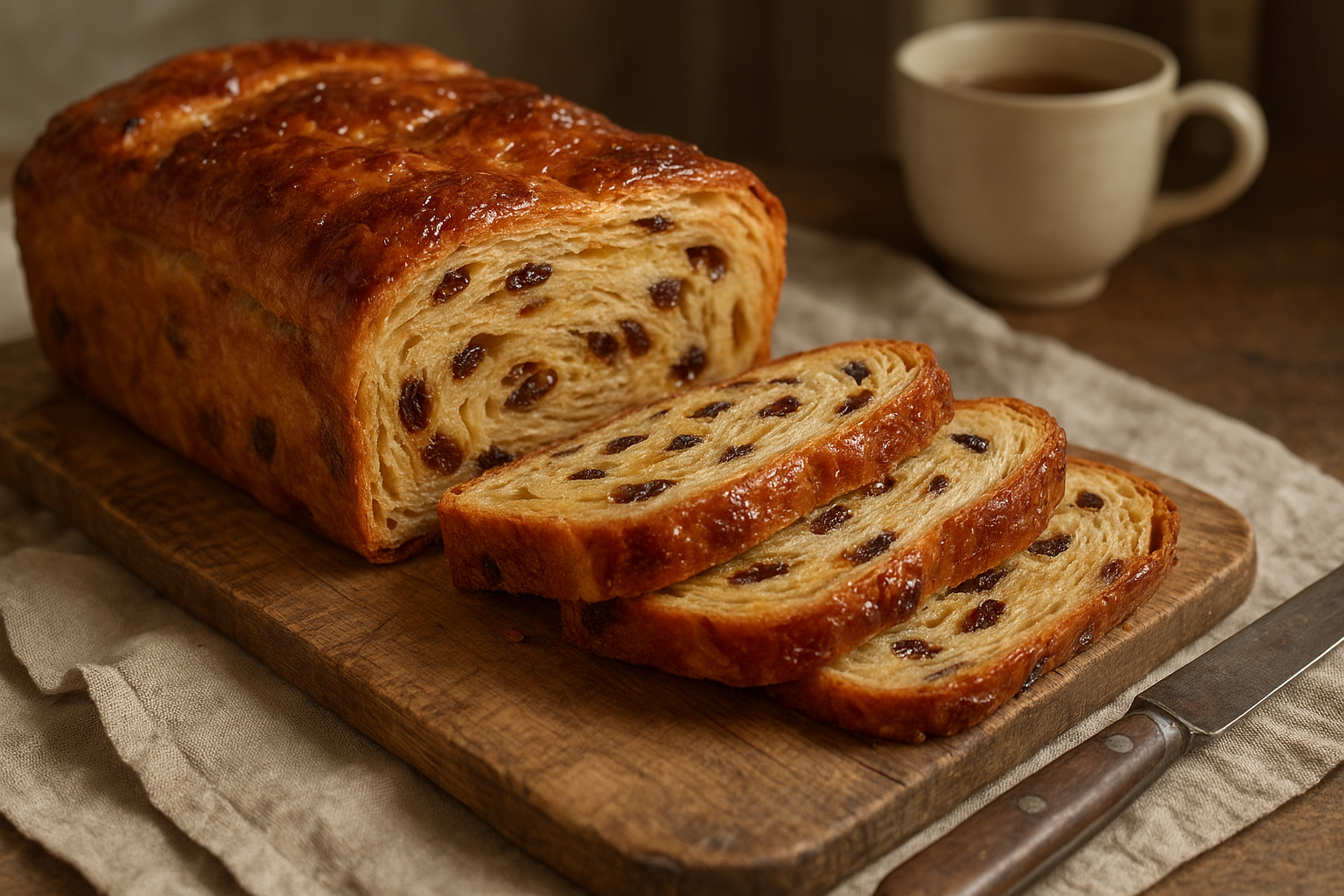
Traditional Lardy Cake Recipe
A classic English enriched tea bread, this lardy cake recipe produces buttery, flaky layers studded with currants and a caramelized sugar crust — perfect with a pot of tea.

Ingredients
- 500g strong bread flour
- 7g active dry yeast (1 packet)
- 60g caster sugar plus extra for sprinkling
- 1 tsp mixed spice
- 1 tsp fine salt
- 300ml warm milk (about 105–110°F / 40–43°C)
- 1 large egg, beaten
- 100g unsalted butter, softened (for dough and finishing)
- 200g lard or suet, cold but spreadable (see tips for substitutes)
- 200–250g currants or mixed dried fruit
Equipment
- Rolling pin
- 9×5 inch (23×13 cm) loaf tin or similar
- Pastry brush
- Mixing bowl, bench scraper, baking tray
- Thermometer (optional) to check internal doneness ~190°F / 88°C
Method
- Mix the dough: In a large bowl whisk flour, 60g caster sugar, salt and mixed spice. Sprinkle the yeast over the warm milk and leave 5 minutes until foamy. Add the milk, beaten egg and 60g softened butter to the dry mix. Stir to form a soft, slightly tacky dough. Knead 8–10 minutes until smooth and elastic.
- First rise: Place dough in a lightly oiled bowl, cover and leave in a warm, draft-free place for 45–60 minutes until doubled.
- Prepare filling: While dough rises, cut cold lard into slices or break into small pieces so it can be spread into thin layers once rolled.
- Roll and layer: Turn the risen dough onto a lightly floured surface. Roll into a rectangle about 30x40cm. Spread a thin, even layer of cold lard across the dough. Sprinkle with a generous pinch of caster sugar, some currants and a light dusting of mixed spice. Fold or roll the dough to create layers — either fold like a letter into three, rotate and roll again, or roll up jelly-roll style for swirl layers. Repeat layering once more if desired for more distinct layers, keeping the lard cold between layers.
- Shape and proof: Shape the layered dough into a loaf and place seam-side down into a greased loaf tin. Cover and proof for 45–60 minutes until noticeably risen but not doubled; it will continue to rise in the oven.
- Top and bake: Preheat oven to 190°C (375°F). Brush the loaf with melted butter and sprinkle a good layer of caster sugar on top for a crunchy caramel crust. Bake 35–40 minutes until deep golden and a skewer comes out clean or internal temperature reaches ~190°F / 88°C.
- Finish: Immediately brush the hot loaf with a little extra melted butter and press a thin sprinkle of sugar into the top for shine and added crunch. Cool in the tin for 10 minutes, then transfer to a wire rack. Slice warm to show the flaky layers.
Nutrition (estimate per slice)
Approximately 340–420 kcal, 12–18g fat, 50–60g carbs, 4–6g protein (varies by portion size and ingredients).
Pro tips: Use cold lard between layers to create distinct flaky strata, distribute fruit evenly so every slice gets currants, and avoid overworking the dough which can make it tough. Proof in a warm, draft-free spot and check doneness with a thermometer (~190°F / 88°C).
Serving ideas
- Slice and serve warm with butter and a strong cup of tea.
- Toast leftover slices and spread with clotted cream or marmalade.
- Serve as part of an afternoon tea or picnic alongside sandwiches and scones.
Make-ahead & storage
Cool completely, then wrap slices or the whole loaf tightly. Freeze up to 3 months or refrigerate up to 5 days. Refresh frozen or chilled slices in a 160°C (325°F) oven for 8–12 minutes.
FAQ
Q: How can I substitute lard in this lardy cake recipe?
A: For a similar texture use cold vegetable shortening; for a richer flavor use cold unsalted butter, though butter melts sooner so layers may be less distinct.
Q: Can this be made vegan?
A: Yes. Replace lard with solid vegetable shortening, use a plant-based milk and an egg replacer (e.g., flax egg) or additional milk; texture will vary slightly.
Q: Why is my lardy cake heavy or dense?
A: Dense results usually come from underproofing, overworking the dough, or overly warm filling fat. Ensure adequate first rise, avoid excessive kneading after layering, and keep lard cold while layering.
Q: How long should I proof the loaf?
A: First rise 45–60 minutes until doubled. After shaping, proof 45–60 minutes in a warm place until noticeably risen but not exhausted. Times vary with ambient temperature.
Try other baked favorites at our recipes hub: MadeForRecipes – Recipes. For more on traditional British baking techniques see BBC Good Food.