

Classic School Cake
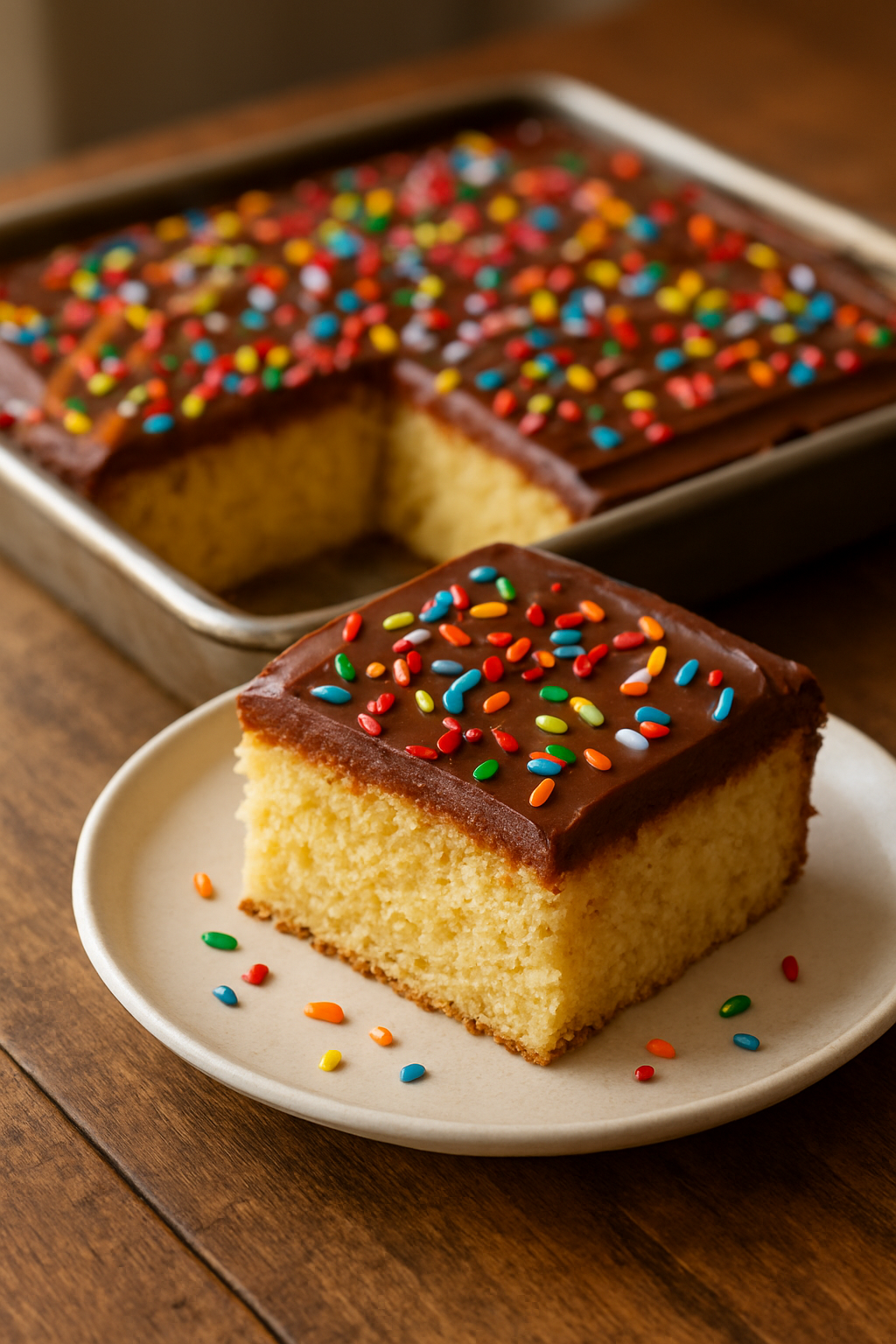
A nostalgic, easy-to-make school cake recipe — perfect for parties, lunchboxes and afternoon tea. Soft vanilla sponge topped with glossy chocolate buttercream and sprinkles.

Classic School Cake Recipe
Ingredients
- 200g plain/all-purpose flour
- 200g caster (white) sugar
- 175g unsalted butter, softened
- 3 large eggs, at room temperature
- 120ml whole milk (or dairy-free milk)
- 2 tsp baking powder
- 1 tsp vanilla extract
- Pinch of salt
For the frosting
- 30g cocoa powder OR 100g melted dark chocolate
- 100g unsalted butter, softened
- 200–250g powdered (icing) sugar, sifted
- 1–2 tbsp milk or cream
- Optional: colorful sprinkles
Equipment
- Sheet cake tin (20 x 30 cm / 8 x 12 in) or 23cm round tin
- Mixing bowl and electric hand whisk or stand mixer
- Sieve for dry ingredients
- Spatula and skewer for doneness check
- Baking parchment and a sifter for icing sugar
Instructions
- Preheat the oven to 180°C / 350°F (160°C fan). Grease your sheet tin and line with baking parchment.
- Cream the softened butter and caster sugar together until pale and fluffy. Add the eggs one at a time, beating well after each addition. Stir in the vanilla extract.
- Sift the flour, baking powder and salt together. Fold the dry ingredients into the butter mixture alternately with the milk, beginning and ending with the dry ingredients. Mix gently until you have a smooth batter — avoid overmixing to keep the sponge tender.
- Pour the batter into the prepared tin, level the surface and bake for 20–25 minutes (for a sheet) or until the top is springy and a skewer inserted into the centre comes out clean. For a round tin the time may be slightly longer.
- Remove from the oven and allow the cake to cool completely in the tin on a wire rack before frosting.
- To make the chocolate buttercream: beat the softened butter until smooth, add cocoa powder (or melted and cooled chocolate) and gradually beat in the powdered sugar until you reach a spreadable consistency. Add a splash of milk if needed. Warm the glaze slightly if too stiff for an ultra-smooth finish.
- Spread the buttercream evenly over the cooled cake. Add sprinkles or simple decoration as desired. Cut into school-friendly squares and serve.
Nutrition (estimate per serving)
Approx per square (1 of 12): 320 kcal, 16g fat, 38g carbs, 3g protein. Values vary by ingredients used.
Pro tips: Avoid overmixing the batter to keep the crumb soft. Test your oven temperature with an oven thermometer if you’re unsure. Grease and line the tin for easy removal. Warm the chocolate glaze slightly and stir to a glossy consistency for the smoothest finish.
Variations & substitutions
- Make it a layered sponge: bake in two round tins and fill between layers with buttercream or jam.
- Use 170ml vegetable oil instead of butter for an extra-moist cake.
- Swap to dairy-free milk and margarine for a vegan option (use egg replacer or 1:1 commercial egg substitute).
- Add 30g cocoa powder to the dry ingredients and reduce flour slightly to make a chocolate cake.
Serving ideas
Cut into school-friendly squares and pack into lunchboxes, serve with a glass of milk or a pot of tea, or turn this into a celebration cake by piping edges, adding more decorations and placing candles on top.
school cake recipe FAQ
How long does this cake keep?
Stored in an airtight container at room temperature, the frosted cake keeps well for 3–4 days. Refrigerate in hot climates — bring to room temperature before serving.
Can you freeze this cake?
Yes. Freeze unfrosted slices wrapped tightly for up to 2 months. Defrost overnight in the fridge and frost just before serving. You can also freeze whole layers unsliced.
How do I make this cake more moist?
Use oil instead of some of the butter, add an extra egg yolk, or brush the baked sponge with a thin sugar syrup before frosting to retain moisture.
How do I scale this recipe for larger trays?
Scale ingredient weights proportionally to the tin area. For example, doubling the recipe suits a larger party tray. Also adjust baking time — larger or deeper trays may need longer at a slightly lower temperature.
For more recipes like this, visit our collection: MadeForRecipes – Recipes. For frosting techniques and proportions see a trusted reference like BBC Good Food.