



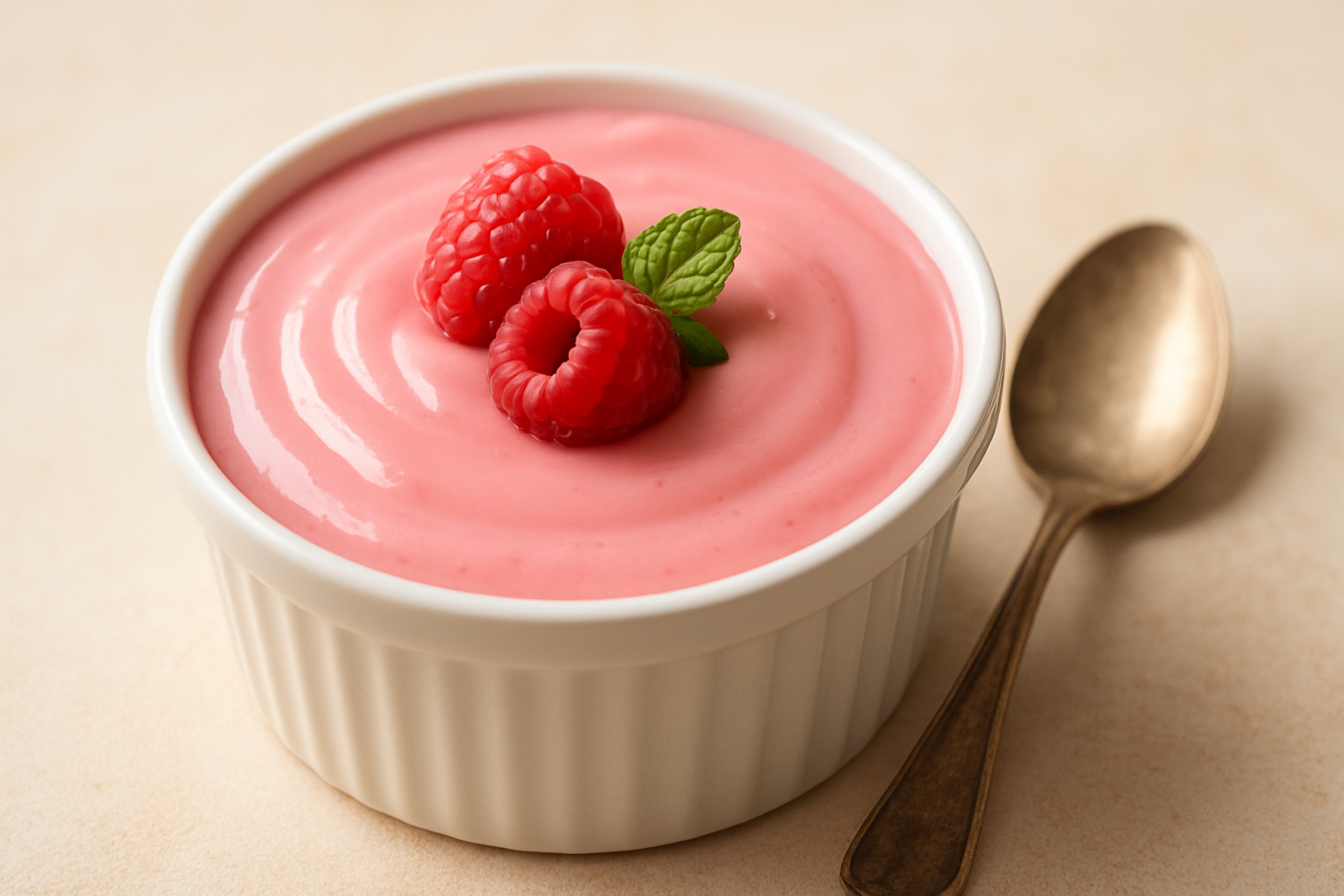
Classic Pink Custard
A smooth, nostalgic pink custard that’s silky, lightly flavored, and perfect chilled — made with whole milk (or cream), egg yolks or egg-free custard powder, and natural pink flavors and color.

Classic Pink Custard Recipe
Ingredients
- 2 cups (500 ml) whole milk or a mix of whole milk and cream for extra richness (see notes for plant milk)
- 4 large egg yolks (or 3 tbsp custard powder or 3 tbsp cornstarch for an egg-free version)
- 1/3 cup (65 g) granulated sugar
- 1 tsp pure vanilla extract
- 2–4 tbsp strawberry or raspberry puree OR 1–2 tbsp grenadine, OR a few drops natural beet juice/food coloring (adjust to taste for color and flavor)
- Pinch of salt
- Optional: 1 tbsp butter for extra sheen and silkiness
Equipment
- Medium saucepan
- Heatproof bowl
- Whisk
- Fine-mesh sieve
- Thermometer (recommended)
- Ramekins or serving dishes
Instructions
- Warm the milk: In a medium saucepan, gently heat the milk with half the sugar and the pinch of salt over medium heat until just steaming and small bubbles form at the edge (about 80–82°C / 175–180°F). Do not boil.
- Whisk yolks: In a heatproof bowl whisk the egg yolks with the remaining sugar until smooth and pale. If using custard powder or cornstarch, whisk it into 1/4 cup cold milk to make a slurry instead of using yolks.
- Temper the yolks: Slowly pour about 1/3 of the hot milk into the yolks while whisking constantly to raise the temperature, then pour the tempered yolk mixture back into the pan with the remaining milk.
- Thicken gently: Return the pan to medium-low heat and stir constantly with a wooden spoon or spatula, scraping the bottom, until the custard thickens enough to coat the back of the spoon (target 82–85°C / 180–185&F). If using custard powder slurry, whisk constantly until thickened and glossy.
- Finish and color: Remove from the heat. Stir in vanilla, butter (if using), and your pink flavor/color option — start with a small amount of puree or coloring and increase until you reach the desired flavor and shade.
- Strain and cool: Pour the custard through a fine-mesh sieve into a clean bowl for extra silkiness to remove any cooked bits. Press plastic wrap directly on the surface to prevent a skin. Chill for at least 1–2 hours until set.
- Serve: Serve chilled in ramekins or use as a filling for trifles, tarts, or layered desserts. Re-whisk gently before serving if needed.
- To prevent curdling, keep heat low and stir constantly once the tempered eggs are added. Use a thermometer and stop at 82–85°C / 180–185&F.
- If your custard splits or curdles, remove from heat and whisk vigorously off the stove; straining can rescue texture. For severe splitting, blend briefly and strain.
- Too runny? Return to low heat and cook slowly while stirring until it thickens, or stir in a small slurry of cornstarch (1 tsp cornstarch + 1 tbsp cold milk) and heat until thick.
- For natural pinks: use concentrated berry purees (start 1–2 tbsp), reduced juices, or a drop of beet juice/food coloring — beet gives color with minimal flavor but use sparingly.
Nutrition (estimate per serving)
Approx. 220 kcal • 9 g fat • 28 g carbs • 6 g protein (varies by milk/cream and sugar amounts)
Serving ideas
- Chilled in ramekins with fresh raspberries and a dollop of whipped cream.
- As a filling for shortbread tartlets or a layered trifle with sponge cake and berries.
- Poured warm over a slice of sponge cake or used between cake layers.
- Garnish with toasted almonds, lemon zest, or a mint sprig for contrast.
FAQ
Q: Can I use plant milks for pink custard?
A: Yes — use full-fat oat or soy milk for best texture. Plant milks produce a slightly different mouthfeel; you may need a small cornstarch slurry to help thicken.
Q: How do I make a vegan/egg-free version?
A: Use custard powder or cornstarch with plant milk. Whisk the powder or cornstarch into cold milk first, then heat and whisk until thick and glossy. Add berry puree for flavor and color.
Q: Why did my custard split or curdle?
A: Overheating or adding eggs to very hot milk causes curdling. Temper eggs slowly and keep the temperature under control (use a thermometer — 82–85°C target).
Q: How can I thicken a runny custard?
A: Gently reheat while stirring until it thickens. For a faster fix, stir in a small cornstarch slurry (1 tsp cornstarch + 1 tbsp cold milk) and bring to a simmer until thick.
Looking for more recipes? Browse our collection at MadeForRecipes – Recipes. For background on custard techniques see this guide from Serious Eats.