



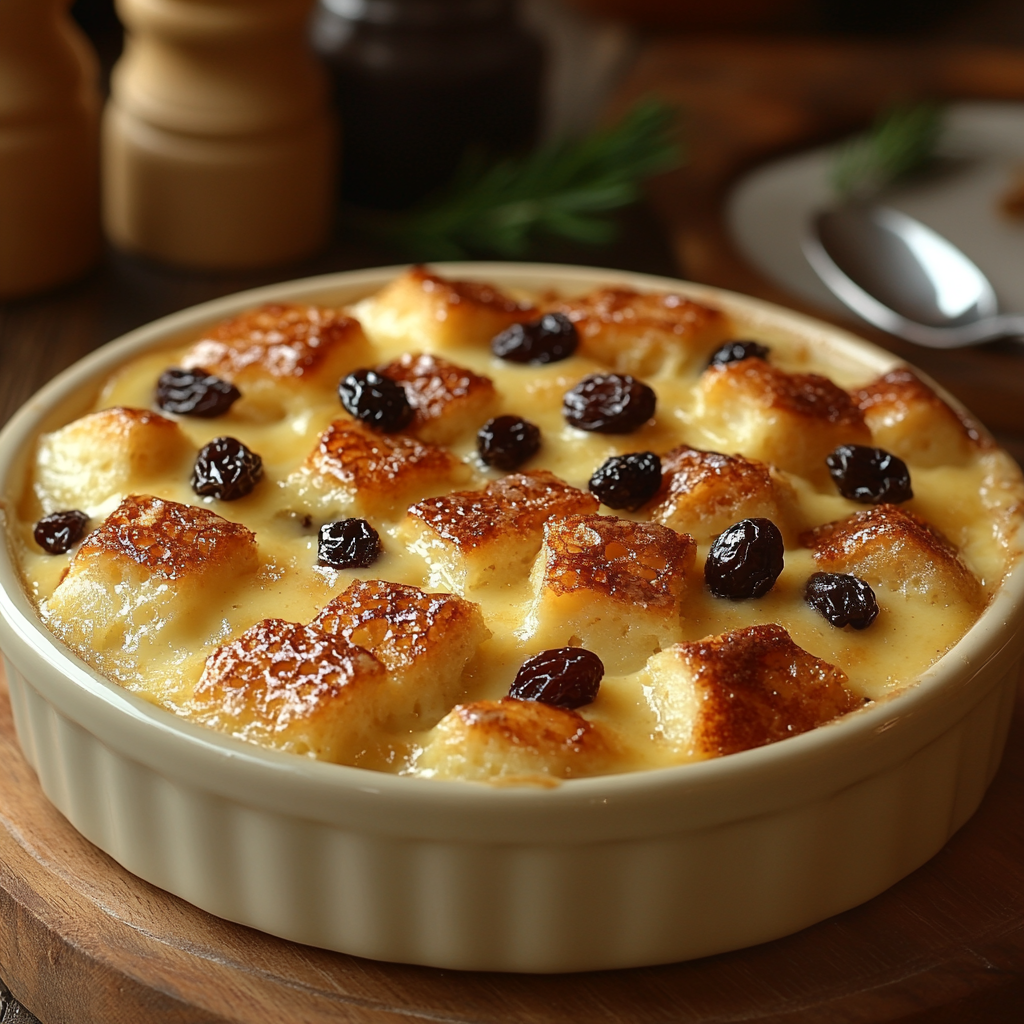
Traditional British Bread and Butter Pudding
A beloved British comfort dessert, bread and butter pudding turns stale bread into a silky, custardy bake with caramelized top — proof that humble ingredients make the best treats.
Ingredients
- 8–10 slices day-old white bread or brioche, crusts removed
- 50g (3½ tbsp) unsalted butter, softened, for spreading
- 500ml whole milk
- 250ml double cream (or extra milk for a lighter pudding)
- 4 large eggs
- 100g caster sugar (plus a little extra to sprinkle)
- 1 tsp vanilla extract or seeds from 1 vanilla pod
- Freshly grated nutmeg or ½ tsp ground cinnamon
- 75–100g raisins, sultanas or mixed dried fruit (optional: soaked)
- Zest of 1 lemon or orange (optional)
- Flaked almonds or icing sugar, to finish (optional)
Equipment
- 1 ceramic or glass baking dish (about 20 x 30 cm / 2–3L)
- Mixing bowl and whisk
- Small saucepan
- Baking tray for bain-marie
- Measuring jug and spoons
Instructions
- Preheat the oven to 180°C/355°F (160°C fan). Lightly butter the baking dish.
- Butter each slice of bread on one side. Layer buttered slices, buttered-side up, in the dish, overlapping slightly. Scatter raisins or dried fruit and citrus zest between layers.
- In a saucepan, warm the milk and cream with half the sugar and the vanilla until just below boiling. Remove from heat.
- In a bowl, whisk the eggs with the remaining sugar and grated nutmeg or cinnamon. Slowly pour a little warm milk into the eggs while whisking to temper, then pour the egg mixture back into the milk, whisking to combine.
- Pour the custard thoroughly over the layered bread so it soaks through. Press gently on the bread to help it absorb the custard. Let rest for 15–30 minutes for best results (or up to 1 hour refrigerated).
- Sprinkle a little extra sugar on top and scatter flaked almonds if using. Place the baking dish in a larger tray and pour hot water into the tray to come halfway up the sides of the dish (bain-marie).
- Bake for 40–50 minutes until the custard is set around the edges and the center is just set (a knife inserted near the center should come out mostly clean). The top should be golden and slightly caramelized.
- Allow to cool for 5–10 minutes before serving so the custard firms slightly. Serve warm with pouring custard, cream or ice cream.
Timing & temps
Oven: 180°C/355°F (160°C fan). Bake 40–50 minutes. Test doneness by checking the center; it should be just set and not liquid. If the top browns too fast, cover loosely with foil for the last 10–15 minutes.
Nutrition (estimate per serving)
Approx: 380–480 kcal; Fat 22–30 g; Carbs 36–50 g; Protein 8–10 g (varies by bread and cream used).
Pro tip: Use day-old bread so it soaks but keeps texture. Evenly buttering each slice helps prevent a soggy bottom and encourages a crisp, caramelized top.
Serving ideas
- Serve warm with pouring custard (traditional), single cream or vanilla ice cream.
- Sprinkle with icing sugar and toasted nuts for texture and presentation.
- For a vintage touch, accompany with a small jug of warmed custard on the side.
If you enjoy classic British desserts, you may also like our Traditional British Eton Mess recipe.
Make-ahead & storage
You can assemble the pudding, cover and refrigerate for up to 12 hours before baking. Reheat gently in a low oven (150°C/300°F) or microwave portions briefly. Freeze baked portions in an airtight container for up to 2 months; thaw overnight in the fridge and reheat.
Variations
- Brioche or croissant pudding for richer texture.
- Chocolate bread and butter pudding: add chocolate chips between layers and use chocolate shavings on top.
- Apple & cinnamon version: layer thinly sliced apples with cinnamon and a little brown sugar.
- Dairy-free/vegan: swap milk and cream for oat or almond milk and use a chia or tofu-based custard (or vegan egg replacer).
Frequently asked questions
Why use stale bread for bread and butter pudding?
Stale or day-old bread absorbs the custard without collapsing, giving a custardy interior and textured top — the best for traditional bread and butter pudding.
How do I stop a soggy bottom?
Evenly butter slices, rest the assembled pudding to allow absorption, and avoid over-pouring custard. Use a shallow dish and bake in a preheated oven; a brief cooling period helps firm the base.
Should I use cream or just milk?
A mix of milk and cream gives a silkier, richer custard. For a lighter pudding use all whole milk or reduce cream to taste.
How long does leftover pudding keep and how should I reheat it?
Keep covered in the fridge for up to 3 days. Reheat gently in a low oven (150°C/300°F) for 10–15 minutes or microwave individual portions until warmed through.
For more warm desserts and classic bakes, see our collection at MadeForRecipes – Recipes or read about the pudding’s history on Wikipedia.