


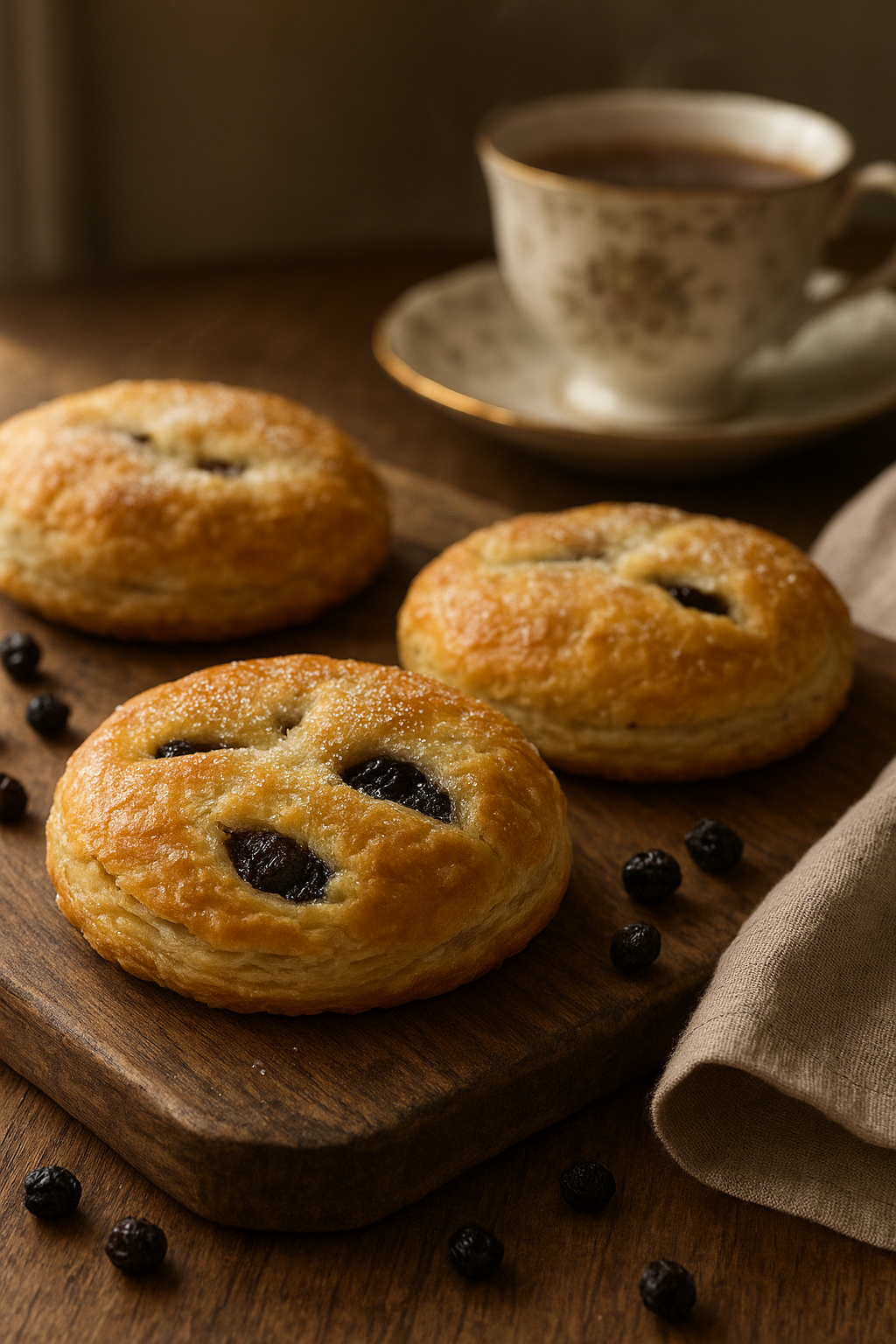
Traditional Eccles Cakes Recipe
A classic British treat from Eccles — learn what makes these flaky, currant-filled pastries unique and how to bake them at home.

Ingredients
- 320g ready-rolled puff pastry (or flaky shortcrust), chilled
- 200g currants (or raisins), fine currants preferred
- 60g light brown sugar
- 50g unsalted butter, very soft
- 1 tsp mixed spice (or 1/2 tsp cinnamon + 1/4 tsp nutmeg)
- zest of 1 lemon
- 1 tsp vanilla extract
- 1 large egg, beaten (for egg wash)
- a pinch of fine salt
- extra granulated sugar for sprinkling
Equipment
- baking tray lined with parchment
- fluted pastry cutter or round cutter (about 8–9 cm)
- rolling pin
- small bowl for egg wash
- sieve or small spoon for sprinkling sugar
Method
- Prepare the pastry: If using block pastry, roll out on a lightly floured surface to about 3–4 mm thick. Cut into 8 circles with a fluted or plain cutter. Keep pastry chilled while you make the filling — cold pastry makes the best flaky layers.
- Make the filling: Briefly soak the currants in a tablespoon of warm water or a splash of orange juice for 5 minutes, then drain. In a bowl, combine currants, brown sugar, mixed spice, lemon zest, softened butter, vanilla and a pinch of salt. Mix until evenly coated — the mixture should be moist but not wet.
- Assemble: Spoon a heaped teaspoon of filling into the center of each pastry disc. Don’t overfill (leave a 1 cm border). Fold the edges up and pinch to seal; traditionally Eccles cakes are flattened and the edges are fluted or crimped. Use a fork or your fingers to flute for the classic look.
- Finish: Place the cakes on the prepared tray. Brush the tops with beaten egg and sprinkle with a little granulated sugar.
- Bake: Heat the oven to 220°C / 430°F (fan 200°C). Bake for 18–22 minutes until puffed and golden. High heat gives the best lift and flaky layers.
- Rest: Remove from the oven and let cool for 5–10 minutes so the filling sets slightly. Serve warm or cool completely for picnic-style eating.
Variations
- Shortcrust version: Use flaky shortcrust pastry for a denser, crumbly shell.
- Vegan swaps: Use plant-based butter and an aquafaba or plant-milk + maple syrup wash instead of egg.
- Flavor twists: Add orange zest or a splash of brandy/rum to the filling for extra depth.
Serving ideas
Serve warm with clotted cream, thick double cream or with a pot of strong tea. Eccles cakes are also excellent cold for picnics or lunchboxes.
Nutrition estimate (per cake)
Approx: 280 kcal • Fat 12g • Carbs 38g • Protein 2g • Sugar 18g
FAQ
How do I store and freeze Eccles cakes?
Store in an airtight container at room temperature for up to 2 days, or in the fridge for 4 days. Freeze baked cakes wrapped well for up to 2 months; thaw and reheat in a low oven.
How should I reheat them?
Reheat in a preheated 160°C / 325°F oven for 8–10 minutes until warmed through. Avoid the microwave to preserve flakiness.
How can I tell if the filling is too wet?
If the filling looks runny or spills when you fold, it’s too wet. Drain soaked currants well and reduce any extra liquid; the mix should cling together.
Substitutes for currants?
Use raisins, sultanas or a mix of dried fruit. For authentic texture, fine currants are traditional and give the classic bite.
Estimated times: Prep 30 mins • Cook 18–22 mins. For calories/portion guidance see Nutrition estimate above.
How Eccles cakes differ: Unlike mince pies, Eccles cakes are simple currant-filled pastries with distinctive fluted edges and a flaky puff or shortcrust shell — not a multi-spice mincemeat.
For more recipes visit our recipes page or read the history on Wikipedia.