

Traditional Eccles Cakes Recipe
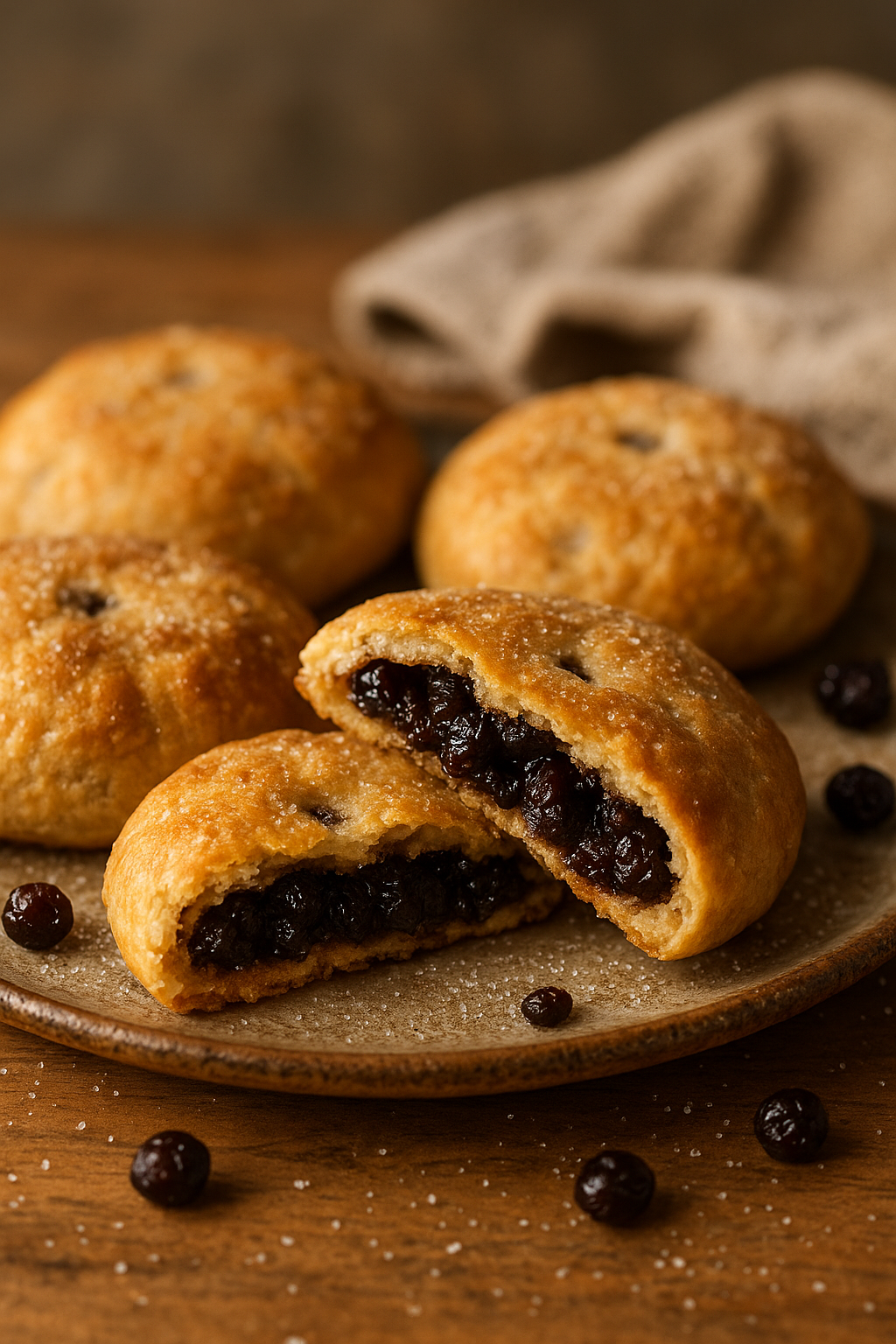
A classic Northern English pastry: these Eccles cakes are filled with sticky currants, warm spice and citrus zest. This traditional eccles cakes recipe highlights what makes them distinct — a flaky pastry shell wrapped around a sweet, spiced currant core.

Ingredients
- 500g ready-rolled puff pastry (or shortcrust pastry alternative)
- 200g currants (or raisins)
- 75g soft light brown sugar
- 50g unsalted butter, softened and cut into small pieces
- 1 tsp ground cinnamon or 1 tsp mixed spice
- zest of 1 lemon or 1 orange
- 1 tbsp dark rum or 2 tbsp orange juice (optional)
- 1 tbsp plain flour (for dusting/handling)
- 1 large egg, beaten (for egg wash)
- caster sugar for sprinkling (optional)
Equipment
- Baking tray lined with baking paper
- Rolling pin and round cutter (about 8-9cm for small cakes)
- Mixing bowl and spoon
- Pastry brush and fork
- Cooling rack
Method overview
This eccles cakes recipe follows three main stages: prepare the currant filling, shape and seal the pastry rounds, then bake until deep golden and flaky.
Instructions
- Soak the currants (10–30 mins): Place the currants in a small bowl with the rum or orange juice and leave for 10–30 minutes to plump up.
- Make the filling (5 mins): Drain any excess liquid and mix currants with brown sugar, mixed spice or cinnamon, lemon or orange zest and the small pieces of butter. Stir until well combined — the butter should help bind the mix.
- Prep the pastry (5 mins): Lightly dust your work surface with plain flour. Roll out the puff pastry to about 3–4mm thick. Use an 8–9cm round cutter to stamp out circles. Re-roll scraps briefly if needed — keep pastry cold to maintain flakiness.
- Assemble (5–10 mins): Spoon 1–2 teaspoons of filling into the centre of each round (don’t overfill). Brush the edges with a little beaten egg, fold the edges up and over the filling to enclose most of it — leave a small steam hole or dock the tops with a fork. Press to seal.
- Finish (2 mins): Place cakes on the prepared tray, brush with beaten egg for shine and sprinkle a little caster sugar on top if you like extra crunch and sweetness.
- Bake (20–25 mins): Preheat oven to 200°C / 400°F / Gas 6. Bake for 20–25 minutes until the pastry is deep golden and flaky. Rotate the tray after 12 minutes for even colouring.
- Rest (5 mins): Transfer to a cooling rack and let cool slightly — they can be served warm or at room temperature.
Timings & temperature
Total active time ~25–35 minutes. Soaking may add up to 30 minutes. Oven: 200°C / 400°F / Gas 6. Bake 20–25 minutes.
Nutrition estimate (per small cake)
Approx: 220 kcal | Fat 11g | Carbs 29g | Protein 2g | Fibre 1g (estimate)
Pro tips: Keep pastry cold, don’t overfill the rounds, use fine currants for best texture, and leave a small steam-release hole to stop leaking. Use egg wash for a glossy finish. Adjust sweetness by reducing sugar by 20–25% if you prefer less sweet.
Serving ideas
- Serve warm with a knob of butter or clotted cream.
- Pair with custard for a pudding-style treat or a pot of strong tea for a traditional serving.
- Store extras at room temperature for 1–2 days, or freeze for longer storage (instructions below).
Make-ahead, freezing & reheating
Assemble unbaked cakes and freeze on a tray, then transfer to a container for up to 1 month. Bake from frozen, adding 5–8 minutes to the bake time. Reheat baked cakes at 160°C / 320°F for 8–10 minutes to refresh the flakiness.
FAQ
How long do Eccles cakes keep?
Store at room temperature in an airtight container for 1–2 days. Refrigerate for up to 4 days (texture will be less flaky). Frozen unbaked cakes keep up to 1 month.
Can I use raisins instead of currants?
Yes — raisins work well and are the most common substitute. If large, chop them so the filling distributes evenly.
Gluten-free or vegan pastry swaps?
Use a gluten-free pastry sheet or make a gluten-free shortcrust. For vegan cakes, choose a vegan puff pastry and replace the egg wash with plant milk or maple syrup for shine.
Can they be made larger or smaller?
Yes — scale the cutter size and filling amount. Larger cakes need slightly longer baking (add 5–8 minutes); smaller ones will cook faster.
Troubleshooting: For a soggy base, bake on a preheated tray and avoid too much liquid in the filling. If filling leaks, reduce the amount and ensure edges are well sealed. For a pale crust, increase oven temperature briefly or brush with egg wash and sugar.
For more traditional British pastries and recipes, explore our recipes collection or read more about Eccles cakes history at Wikipedia.