



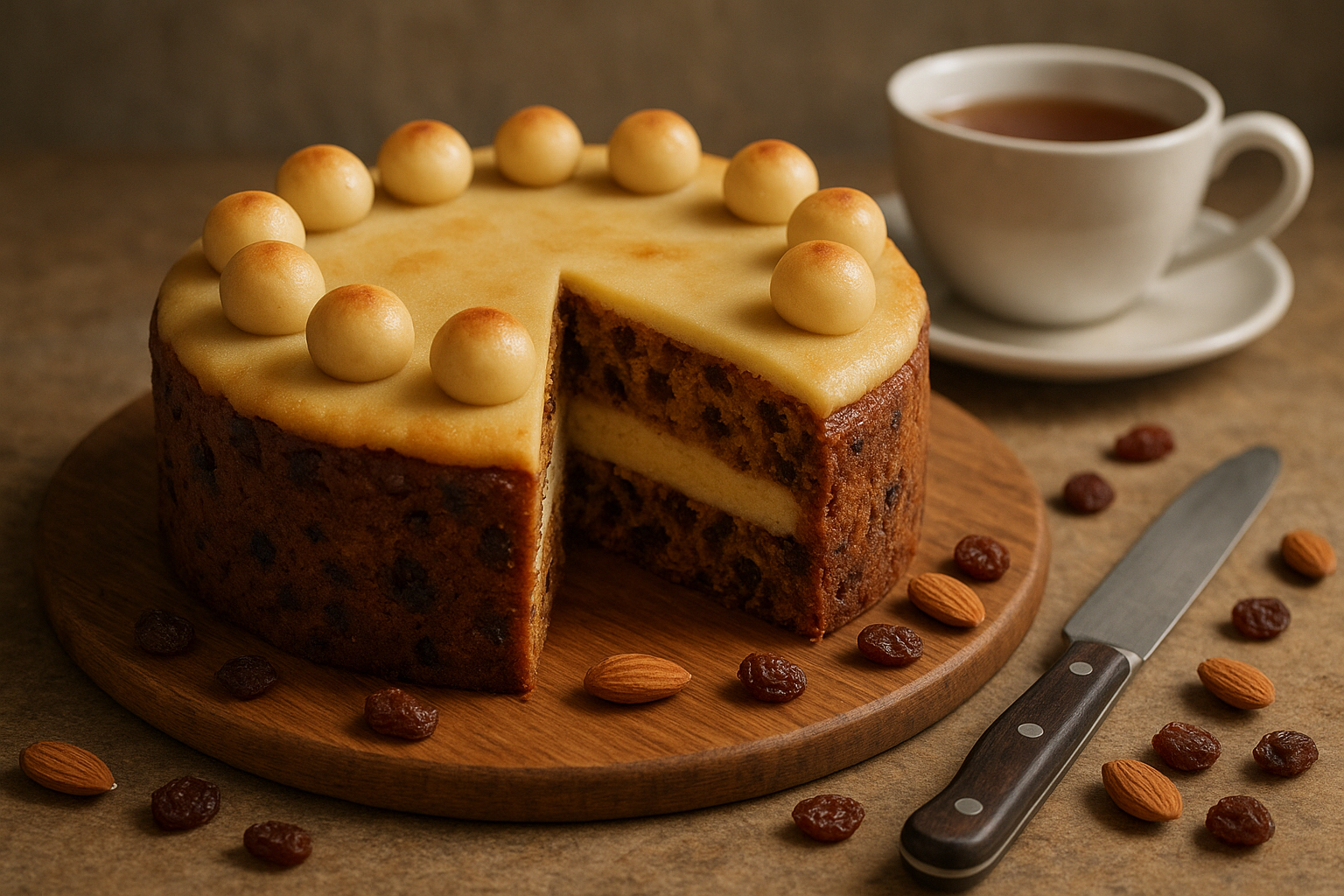
Classic Simnel Cake Recipe
A traditional British Easter fruit cake layered with marzipan — this simnel cake recipe is rich, aromatic and perfect for celebrating or gifting.

Ingredients
- 400g mixed dried fruit (sultanas, currants, raisins)
- 50g mixed peel
- 150ml orange juice or strong black tea (for soaking)
- 200g unsalted butter, softened
- 200g caster sugar
- 4 large eggs
- 225g self-raising flour (or 225g plain flour + 2 tsp baking powder)
- 100g ground almonds
- 1 tsp ground cinnamon (or nutmeg, or a mix)
- Zest of 1 orange and 1 lemon
- 400g ready-to-roll marzipan (about 250g for a middle layer, 150g for top and decorations)
- 3 tbsp apricot jam or sugar syrup (warmed) for glazing
- Optional: 2–3 tbsp brandy, rum or orange liqueur for soaking (for a boozy version)
Equipment
- Two 20cm (8in) round cake tins or one deep 20cm tin
- Electric mixer or wooden spoon
- Mixing bowls, spatula, skewer
- Rolling pin and baking paper
- Serrated knife and cooling rack
Instructions
- Soak the fruit: Place the mixed dried fruit and mixed peel in a bowl and cover with orange juice or strong tea. Stir in spirit if using. Cover and leave to soak for several hours or overnight — this deepens flavour and plumps the fruit.
- Preheat and prepare tins: Preheat the oven to 170°C (150°C fan) / 340°F / Gas 3. Grease and line two 20cm tins (or a deep tin) with baking paper.
- Cream butter and sugar: Beat the softened butter and caster sugar until pale and fluffy. Add the eggs one at a time, mixing well after each addition. If the mixture looks like it may curdle, add a tablespoon of flour with each egg.
- Add flavour: Stir in the orange and lemon zest and sift in the flour (and baking powder if using plain flour). Fold in the ground almonds and spice until evenly combined.
- Fold in the fruit: Drain (or include soaking liquid if you prefer a moister cake) and fold the soaked fruit and peel into the batter gently — do not overmix.
- Divide and bake: Spoon the mixture into the prepared tins (or into the deep tin) and level the tops. Bake for around 1 hr–1 hr 20 mins until a skewer inserted into the centre comes out clean. For fan ovens reduce temperature by 20°C.
- Cool and prepare marzipan: Leave cakes in tins for 10–15 mins then turn out onto a wire rack to cool completely. Roll out about 250g marzipan to the size of the cake for the middle layer and 150g for the top.
- Assemble with marzipan: If you baked two layers, spread a little warmed apricot jam on the cut surface of the bottom layer, place the rolled marzipan disc on top and sandwich with the second cake layer. If you used a single deep tin, slice the cake horizontally and insert the marzipan disc between layers.
- Top marzipan and decorate: Roll the remaining marzipan to cover the top of the cake smoothly. Use a little jam to stick it on. Make eleven small marzipan balls and place them in a ring on the top — these traditionally represent the eleven apostles (excluding Judas).
- Glaze: Brush the marzipan with warmed apricot jam to glaze. Alternatively, lightly grill under a hot grill for a minute or two to caramelise — watch carefully to avoid burning.
- Rest before serving: Wrap the cake and rest for 24–48 hours to allow flavours to develop before slicing and serving.
Nutrition estimate (per slice)
Approx. 360 kcal • Fat 14g • Carbs 50g • Protein 5g • Fibre 2g
Serving ideas
- Serve sliced with a cup of tea or coffee.
- Pair with clotted cream or a small glass of sweet sherry for dessert.
- Wrap in parchment and cellophane for an Easter or holiday gift.
- Variations: Make a lighter citrus version with extra zest and candied peel; soak fruit in alcohol for a boozy cake; try gluten-free flour blends and dairy-free spreads for intolerances.
Tips & troubleshooting
- Do not overmix the batter once the flour is added — overworking causes a dense cake.
- Test with a skewer: if it comes out clean (or with a few moist crumbs) the cake is done.
- To avoid a soggy bottom, ensure tins are well lined and bake on a middle shelf; underbaking causes wet centres.
- If the cake is dry, brush warm syrup or extra jam between layers before sandwiching the marzipan.
- Wrap and rest the cake for 24–48 hours — this develops flavour and firms texture.
FAQ
Yes — simnel cake stores well. Wrap tightly and keep at room temperature for up to 1 week or refrigerate for longer. Flavours improve after 24–48 hours.
How do I store and freeze simnel cake?Freeze undecorated cake (no marzipan) tightly wrapped for up to 3 months. Thaw overnight in the fridge, then apply marzipan and glaze before serving. For short-term storage keep wrapped at room temperature.
Why eleven marzipan balls?The eleven balls traditionally represent the eleven apostles (excluding Judas) and are a customary decoration on Simnel cakes at Easter.
What can I substitute for marzipan or alcohol?For a marzipan substitute try almond paste or a thin layer of frangipane (won’t give same texture). For alcohol-free versions soak fruit in orange juice or tea instead of brandy/rum.
For more recipes and baking guides visit our recipes index. For historical background see an overview at BBC Food.